
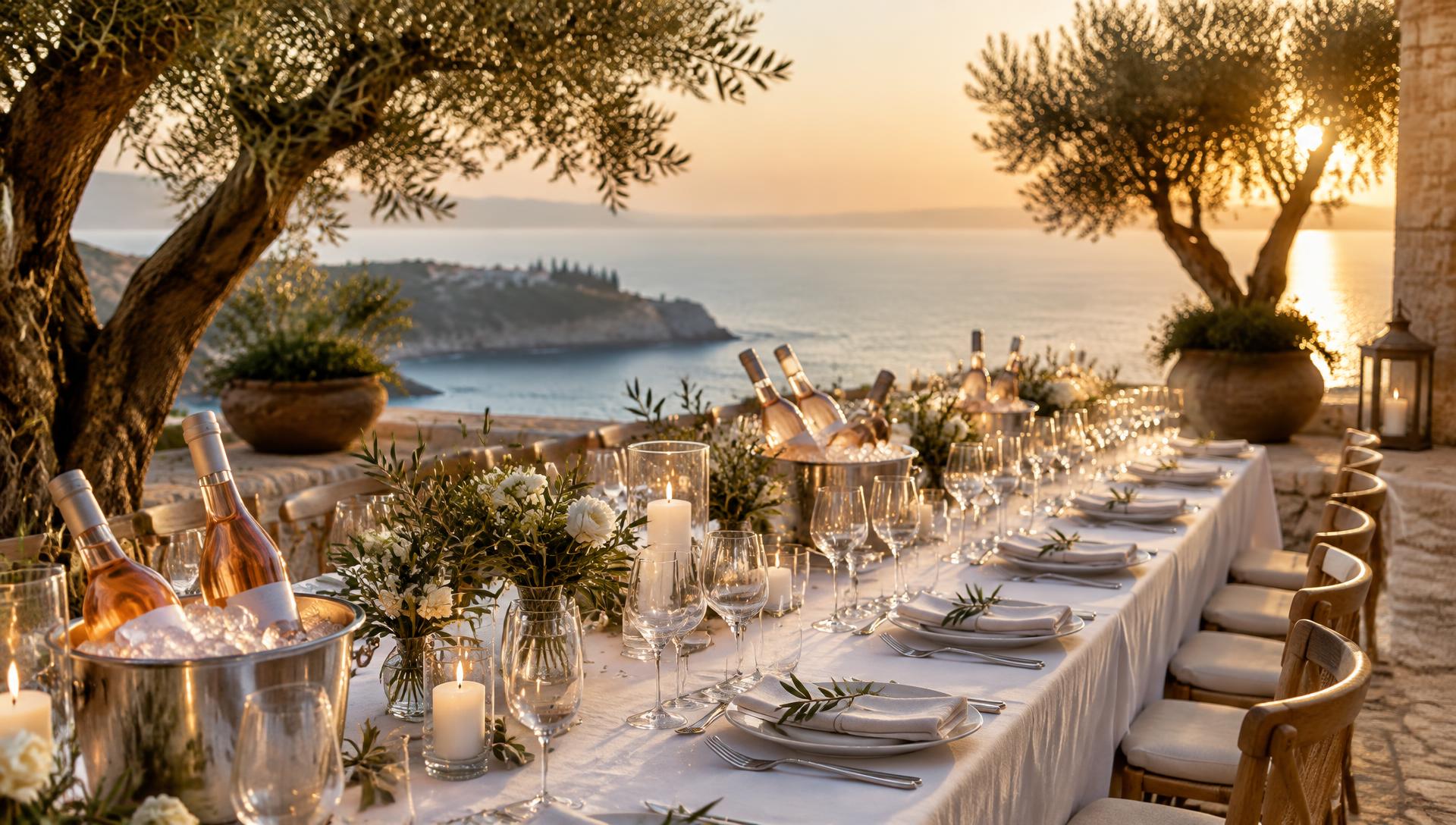
How many bottles of wine do I need for an event?
A standard 75 cl wine bottle commonly provides around five 150 ml servings. To estimate an event requirement, calculate the total expected wine servings and divide by approximately five, then adjust for event duration, food, other beverages and a sensible operational buffer.
For example, a three-hour dinner for 50 guests where wine is the main drink comes out at about 42–49 bottles; for 100 guests, about 84–97.
This is an event inventory calculation, not an individual consumption recommendation.
Quick formula
Estimated bottles = expected total wine servings ÷ 5
- 750 ml bottle
- ≈ 5 × 150 ml servings
- ≈ 6 × 125 ml servings
Professional venues may use different pour sizes. Add a planning buffer where appropriate for event logistics.
Event Wine Calculator
Estimate total event stock. Results update instantly.
Not every guest drinks wine. Lower this if many guests will choose other drinks.
Estimated total wine requirement
42–49 bottles
Estimated number of servings: about 210 · Estimated chilled bottles required at service start: about 30
Estimated Maison Cala requirement: 42–49 bottles
This is an event-planning estimate, not a consumption recommendation. Actual requirements vary according to service style, guest preferences, duration, food and the complete beverage programme.
For large or multi-day events, speak with your caterer, venue or hospitality team before finalising quantities.
How the calculation works
It considers guest count, event duration, meal format, wine's role in the beverage programme, other drinks available and an operational buffer. These are planning rules of thumb, not exact figures:
- The share of guests expected to choose wine scales the total (100% assumes everyone may have some wine; lower it when many guests prefer other drinks).
- Chilled at service start: about 60% of the upper estimate ready cold when service begins, with the rest kept in cold reserve.
- Average wine servings across all guests, by service duration: 2 for 1 hour, 3 for 2 hours, 4 for 3 hours, 4.5 for 4 hours, 5 for 5+ hours, 6 for a full day.
- Meal format adjusts that figure: canapés ×0.9, brunch ×0.8, lunch or buffet ×1, dinner ×1.05, multi-course ×1.1.
- Wine's role: one of several alcoholic drinks ×0.7, mainly with the meal ×0.8. Welcome drink only uses a flat 1.5 servings per guest.
- Each other alcoholic drink on offer reduces wine's share by 10%, and a non-alcoholic programme by 5%, down to a minimum of 40%.
- Servings are converted at 5 × 150 ml per 75 cl bottle, then a range is applied: lean ×0.9–1, balanced ×1–1.15, additional event buffer ×1.1–1.3. Results are rounded up.
- Wine mixes split the total: rosé + white 60/40, rosé + red 70/30, rosé + white + red 50/30/20, or your own percentages.
- Maison Cala range = the all-rosé estimate for your guests and duration (balanced), multiplied by: primary rosé ×1, one of several wines ×0.5, lunch ×0.5, dinner ×0.6, selected moments only ×0.3. Welcome service uses the welcome-drink rule (1.5 servings per guest).
All results are ranges, rounded up — not exact figures.
Wine planning by guest count
| Guest count | Short reception | Dinner | Multi-stage event |
|---|---|---|---|
| 20 guests | 11–13 | 17–20 | 22–26 |
| 30 guests | 17–19 | 26–29 | 33–38 |
| 50 guests | 27–32 | 42–49 | 55–64 |
| 75 guests | 41–47 | 63–73 | 83–95 |
| 100 guests | 54–63 | 84–97 | 110–127 |
| 150 guests | 81–94 | 126–145 | 165–190 |
| 200 guests | 108–125 | 168–194 | 220–253 |
| 250+ guests | 135–156+ | 210–242+ | 275–317+ |
Illustrative event inventory ranges only. Actual requirements depend on duration, service format and other beverages. Short reception = 2 hours with canapés; dinner = 3 hours; multi-stage = 5+ hours with a multi-course meal; wine as main drink, balanced estimate, bottles.
Standard bottle size
A standard wine bottle holds 75 cl. At a 150 ml pour that is about five glasses; at 125 ml, about six. Magnums (1.5 l) hold the equivalent of two bottles.
Professional venues may use different standard pours, and local rules and service policies always take priority.
How many bottles of wine for 20 guests?
Short reception (2 hours, canapés): about 11–13 bottles. Dinner (3 hours): about 17–20 bottles. Multi-stage event such as a wedding (5+ hours, multi-course): about 22–26 bottles.
These assume wine is the main alcoholic drink; serving sparkling wine, cocktails or beer as well reduces the wine requirement.
How many bottles of wine for 30 guests?
Short reception (2 hours, canapés): about 17–19 bottles. Dinner (3 hours): about 26–29 bottles. Multi-stage event such as a wedding (5+ hours, multi-course): about 33–38 bottles.
These assume wine is the main alcoholic drink; serving sparkling wine, cocktails or beer as well reduces the wine requirement.
How many bottles of wine for 50 guests?
Short reception (2 hours, canapés): about 27–32 bottles. Dinner (3 hours): about 42–49 bottles. Multi-stage event such as a wedding (5+ hours, multi-course): about 55–64 bottles.
These assume wine is the main alcoholic drink; serving sparkling wine, cocktails or beer as well reduces the wine requirement.
How many bottles of wine for 75 guests?
Short reception (2 hours, canapés): about 41–47 bottles. Dinner (3 hours): about 63–73 bottles. Multi-stage event such as a wedding (5+ hours, multi-course): about 83–95 bottles.
These assume wine is the main alcoholic drink; serving sparkling wine, cocktails or beer as well reduces the wine requirement.
How many bottles of wine for 100 guests?
Short reception (2 hours, canapés): about 54–63 bottles. Dinner (3 hours): about 84–97 bottles. Multi-stage event such as a wedding (5+ hours, multi-course): about 110–127 bottles.
These assume wine is the main alcoholic drink; serving sparkling wine, cocktails or beer as well reduces the wine requirement.
How many bottles of wine for 150 guests?
Short reception (2 hours, canapés): about 81–94 bottles. Dinner (3 hours): about 126–145 bottles. Multi-stage event such as a wedding (5+ hours, multi-course): about 165–190 bottles.
At this scale, chilled storage, ice, bar positions and staffing matter as much as the bottle count. Plan reserve stock with your caterer or venue.
How many bottles for 200+ guests?
Short reception (2 hours, canapés): about 108–125 bottles. Dinner (3 hours): about 168–194 bottles. Multi-stage event such as a wedding (5+ hours, multi-course): about 220–253 bottles.
At this scale, chilled storage, ice, bar positions and staffing matter as much as the bottle count. Plan reserve stock with your caterer or venue.
How event duration changes quantity
Guests usually drink more in the first hour of an event, then the pace slows. That is why a four-hour event does not need double the wine of a two-hour one. Long, multi-stage days — welcome drinks, dinner, dancing — should be planned phase by phase.
Other drinks matter
If you also serve champagne, cocktails, beer or spirits, wine becomes one part of the programme and the requirement drops. A strong alcohol-free offer also changes the mix. Plan the full beverage list together rather than each drink in isolation.
How much rosé vs white vs red?
There is no universal formula. Summer daytime and outdoor events on the Mediterranean often lean heavily towards rosé; formal winter dinners often lean towards red. A common starting point for a mixed summer event is about half rosé, with white and red sharing the rest — then adjust to your menu and guests.
Summer events
Heat changes logistics more than quantities: bottles warm quickly, ice melts and guests want water. Plan more chilled reserve stock, shaded ice tubs and plenty of water alongside the wine.
How much rosé for an event?
For an all-rosé programme, use the full calculator result. For a mixed programme, apply your rosé share to the total — the calculator does this automatically and shows an estimated Maison Cala requirement.
How much wine for a wedding?
Plan by phase: welcome drink, cocktail hour, dinner and evening. Rosé often works at the welcome and cocktail hour; dinner may mix rosé, white and red. Agree reserve stock and leftover policy with your caterer before ordering.
For weddings across several days, calculate each day separately and add them up — the calculator lets you add several events.
Wine for a Wedding — full guide and calculator · Weddings on the French Riviera · Wedding planners
Private parties
Garden parties, birthdays and villa evenings vary widely. Duration and whether food is served are the biggest factors. A balanced estimate with chilled reserve stock usually avoids both shortages and waste.
How much wine for a corporate event?
Corporate receptions are often shorter and offer several drinks, so wine's share is usually lower. Check company policies on alcohol, and make alcohol-free options prominent.
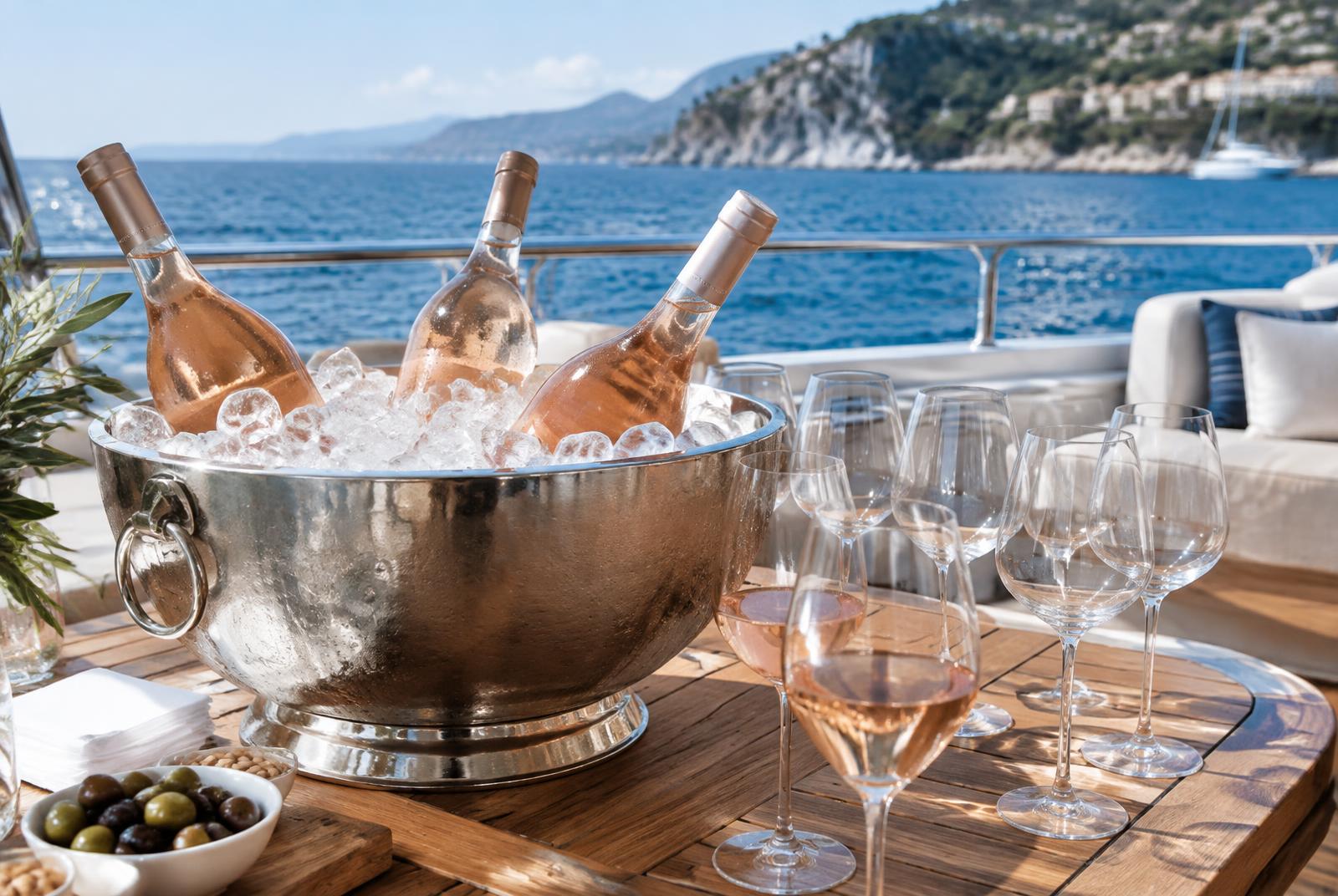
How much rosé for a yacht party?
On board, storage space and chilling capacity are the real limits. Work with the crew on fridge space, ice and where reserve bottles can be kept cold and secure. Day charters are planned like a reception; overnight charters like several events.
Rosé wine for yachts · Rosé for yachts · Antibes yacht planning · Monaco
Full yacht charter week
For a week on board, plan each day as its own event — lunches, sundowners, dinners — and agree a provisioning schedule so stock can be topped up at ports rather than carried all at once.
Villa stays
Multi-day villa stays combine everyday meals with one or two larger evenings. Plan the larger evenings with the calculator and add a modest everyday stock for the rest.
Multi-day events
Add each day separately rather than multiplying one figure. Welcome evenings, the main event and a recovery brunch each have very different requirements.
Multiple locations
When an event moves between a villa, a yacht and a beach venue, calculate each location separately. Each needs its own chilled stock and delivery timing.
Don't only calculate bottles. Calculate refrigeration.
The correct bottle quantity is useless if the wine reaches guests at the wrong temperature. Before the event, check fridge and cold-room capacity, how many ice buckets and service coolers you have, and where backup chilled bottles will be kept.
Outdoor conditions matter: sun, heat and wind warm bottles quickly. Plan shaded storage and rotate bottles from cold storage into service rather than chilling everything at once.
Plan the ice separately.
Ice demand depends on the number of buckets, the heat, the duration, the number of service stations and how much refrigeration the venue has. There is no single reliable figure — agree quantities and top-up deliveries with your caterer or venue. Ice with water chills a bottle faster than ice alone.
What if you order too much?
A small operational buffer can help prevent running out. Excessive over-ordering, though, creates cost, transport, storage and waste.
Before purchasing large event quantities, ask your supplier about their unopened-stock policy, storage and terms.
What happens to opened wine after the event?
Reseal opened bottles, refrigerate them promptly and assess freshness — aroma, appearance and taste — before serving them later.
Plan the whole beverage programme.
Offer water, sparkling water and good non-alcoholic drinks throughout, serve food alongside the wine and use appropriate professional service. Quantities on this page are total event stock for planning, not targets per person. Please enjoy responsibly.
Wedding weekend tool
Plan each wedding event separately, then see the consolidated total.
Friday welcome dinner: 68–78 bottles
Saturday reception: 59–68 bottles
Saturday dinner: 132–152 bottles
Sunday brunch: 39–45 bottles
Consolidated total
298–343 bottles
Of which rosé: 205–236
This is an event-planning estimate, not a consumption recommendation. Actual requirements vary according to service style, guest preferences, duration, food and the complete beverage programme.
For the full wedding planning guide, read Wine for a Wedding.
Maison Cala
Planning Maison Cala for your event?
Estimated Maison Cala planning range: 51–58 bottles
Would you like our team to review the requirement?
This is an event-planning estimate, not a consumption recommendation. Actual requirements vary according to service style, guest preferences, duration, food and the complete beverage programme.
Maison Cala
Maison Cala Rosé
Maison Cala is a French Grenache rosé produced in Southern France — not a Provence rosé. For weddings, yachts, villas and private events, our team can review your calculator result and discuss your Maison Cala requirement. Availability is confirmed case by case.
- Wine
- French rosé
- Grape
- Grenache
- Tasting
- Pale pink · Raspberry · Redcurrant · Vine peach · Fresh. Thirst-quenching. Beautifully rounded.
- Produced in
- Southern France
- Vintage
- 2024
- Bottle size
- 75 cl
- Serving temperature
- 12–14°C
Please enjoy responsibly.
Frequently asked questions
How many glasses are in one bottle of wine?
A standard 75 cl bottle gives about five 150 ml servings or six 125 ml servings. Professional venues may use different pour sizes.
How many bottles of wine for 20 guests?
As an event inventory estimate with wine as the main drink: about 11–13 bottles for a two-hour reception, 17–20 for a three-hour dinner and 22–26 for a long multi-stage event. Other drinks, food and the share of guests choosing wine change the figure.
How many bottles of wine for 30 guests?
As an event inventory estimate with wine as the main drink: about 17–19 bottles for a two-hour reception, 26–29 for a three-hour dinner and 33–38 for a long multi-stage event. Other drinks, food and the share of guests choosing wine change the figure.
How many bottles of wine for 50 guests?
As an event inventory estimate with wine as the main drink: about 27–32 bottles for a two-hour reception, 42–49 for a three-hour dinner and 55–64 for a long multi-stage event. Other drinks, food and the share of guests choosing wine change the figure.
How many bottles of wine for 75 guests?
As an event inventory estimate with wine as the main drink: about 41–47 bottles for a two-hour reception, 63–73 for a three-hour dinner and 83–95 for a long multi-stage event. Other drinks, food and the share of guests choosing wine change the figure.
How many bottles of wine for 100 guests?
As an event inventory estimate with wine as the main drink: about 54–63 bottles for a two-hour reception, 84–97 for a three-hour dinner and 110–127 for a long multi-stage event. Other drinks, food and the share of guests choosing wine change the figure.
How many bottles of wine for 150 guests?
As an event inventory estimate with wine as the main drink: about 81–94 bottles for a two-hour reception, 126–145 for a three-hour dinner and 165–190 for a long multi-stage event. Other drinks, food and the share of guests choosing wine change the figure.
How many bottles of wine for 200 guests?
As an event inventory estimate with wine as the main drink: about 108–125 bottles for a two-hour reception, 168–194 for a three-hour dinner and 220–253 for a long multi-stage event. Other drinks, food and the share of guests choosing wine change the figure.
How much wine do I need for a wedding?
Plan each phase — welcome drinks, reception, dinner, evening — separately and add them up. Use the wedding weekend tool on this page, or the full Wine for a Wedding guide.
How much wine for a private party?
Duration and food are the biggest factors. Use the calculator with your guest count, duration and other drinks, and choose a balanced estimate with a cold reserve.
How much wine for a corporate event?
Corporate receptions are often shorter and offer several drinks, so wine is usually one part of the programme. Set wine's role to 'one of several alcoholic beverages' in the calculator.
How many bottles of rosé do I need?
Apply your rosé share to the total. The calculator splits rosé, white and red automatically and shows the rosé figure.
How should I split rosé, white and red?
There is no universal formula. Summer daytime events often lean towards rosé; a common starting point for a mixed summer event is about half rosé, with white and red sharing the rest.
Should I order extra wine for an event?
A small operational buffer helps prevent running out, but excessive over-ordering adds cost, storage and waste. Check your supplier's unopened-stock terms first.
How much wine should be chilled before an event?
Have a good share ready cold when service begins — the calculator shows an estimate — and keep the rest in cold reserve, rotating bottles into service.
Is this calculator a recommendation for how much to drink?
No. It estimates total inventory for an event. It is not a personal consumption guide.
Is Maison Cala a Provence rosé?
No. Maison Cala is a French Grenache rosé produced in Southern France.
Continue reading
- Grenache Rosé: A Guide to One of the Mediterranean’s Great Rosé Grapes
- How to Serve Rosé Wine
- Rosé Wine Food Pairing: What to Eat with Rosé
- Rosé Wine for Yachts
- Rosé Wine for a French Riviera Wedding
- Wine for a Wedding
- The Mediterranean Apéritif
- Rosé Wine Serving Temperature
- How Long Does Rosé Wine Last?
- French Rosé Wine: A Complete Guide
- Languedoc Rosé Wine: A Complete Guide
- Is Rosé Wine Dry or Sweet?
- How Is Rosé Wine Made?
- Rosé Wine with Seafood: What Pairs Best?
- What Does HVE Certification Mean for Wine?