
What Does HVE Mean?
HVE (Haute Valeur Environnementale, or High Environmental Value) is a French government-backed environmental certification for farms, including vineyards. It is the highest of three levels in France's environmental certification scheme and assesses a whole agricultural holding on four areas: biodiversity, plant-protection strategy, fertiliser management and water management. An independent, approved body audits the holding. HVE certifies the farm or estate and its practices — it is not an organic label, and it does not automatically apply to every brand or bottle linked to that estate.
What Is HVE Certification?
Haute Valeur Environnementale is part of France's official environmental certification scheme for farms (certification environnementale des exploitations agricoles), set out in the French Rural Code and overseen by the Ministry of Agriculture. It was introduced following the Grenelle de l'Environnement in the late 2000s.
It applies to all kinds of farms — not only vineyards — and wine estates are among its most frequent users. The certification looks at the environmental performance of the whole holding rather than at a single product.
The Three Levels of French Environmental Certification
| Level | What it means |
|---|---|
| Level 1 | The holding meets the baseline environmental requirements that apply to farms and carries out an environmental self-assessment. |
| Level 2 | The holding follows a set of environmental good-practice requirements, verified by audit. |
| Level 3 — HVE | The holding reaches performance thresholds across the four HVE areas, verified by an independent approved certification body. Only level 3 may be called Haute Valeur Environnementale. |
When people speak of an “HVE vineyard”, they mean a holding certified at level 3.
What Does HVE Evaluate in a Vineyard?
| Area | What is assessed (in general terms) |
|---|---|
| Biodiversity | Habitats and landscape features such as hedges, grass cover, trees, field margins and the diversity of the farm. |
| Plant-protection strategy | How the holding manages pests and diseases and limits its reliance on plant-protection products. |
| Fertiliser management | How nutrient inputs are planned and limited to reduce pressure on soil and water. |
| Water management | How water is used and managed, including irrigation practices where relevant. |
The detailed indicators and thresholds are defined in the official reference framework (référentiel). They were strengthened in a revision that took effect from 2023, with further tightening phased in over the following years.
How Does HVE Certification Work?
- The holding prepares and documents its practices against the HVE framework.
- An independent certification body approved by the French authorities audits the holding.
- If the thresholds are met, the holding is certified for a set period, with follow-up checks.
- Certification must be renewed to remain valid.
Because certification is granted to a holding for a period of time, the certification year and current validity both matter.
What Does HVE Mean on a Wine Label?
HVE certifies an agricultural holding, not a wine brand. A bottle may refer to HVE when the wine comes from a certified holding and the producer meets the rules for using the mention or logo — for example a wording such as “issu d'une exploitation de Haute Valeur Environnementale”.
Where a wine is made from grapes of several origins, specific rules govern how much must come from certified holdings before the mention can be used. A brand that buys or works with grapes from an HVE estate is not itself certified, and should not suggest otherwise.
HVE vs Organic Wine: What's the Difference?
| HVE | Organic (EU) | |
|---|---|---|
| Who sets the rules | French government scheme | European Union regulation |
| What is certified | The farm's environmental performance | Farming and winemaking methods |
| Synthetic pesticides and fertilisers | Not banned; use is assessed and limited | Generally prohibited |
| Winemaking rules | Not covered | Specific organic winemaking rules apply |
| Label | HVE mention or logo | EU organic leaf logo |
HVE and organic are different approaches. An HVE wine is not an organic wine unless it is separately certified organic. Some estates hold both.
What HVE Does Not Guarantee
- That a wine is organic or biodynamic.
- Anything about taste, quality or style.
- Anything about the winery's cellar practices, sulphites or additives.
- That every wine or brand linked to an estate is certified.
- Any specific practice not stated in the certificate — such as no irrigation.
How Can You Verify HVE Certification?
- Ask the producer for the certificate, its date and the certification body.
- Check the French Ministry of Agriculture's published list of HVE-certified holdings.
- Check that the certification is still valid and covers the holding the wine comes from.
Maison Cala
Maison Cala, Domaine de la Périnade and HVE
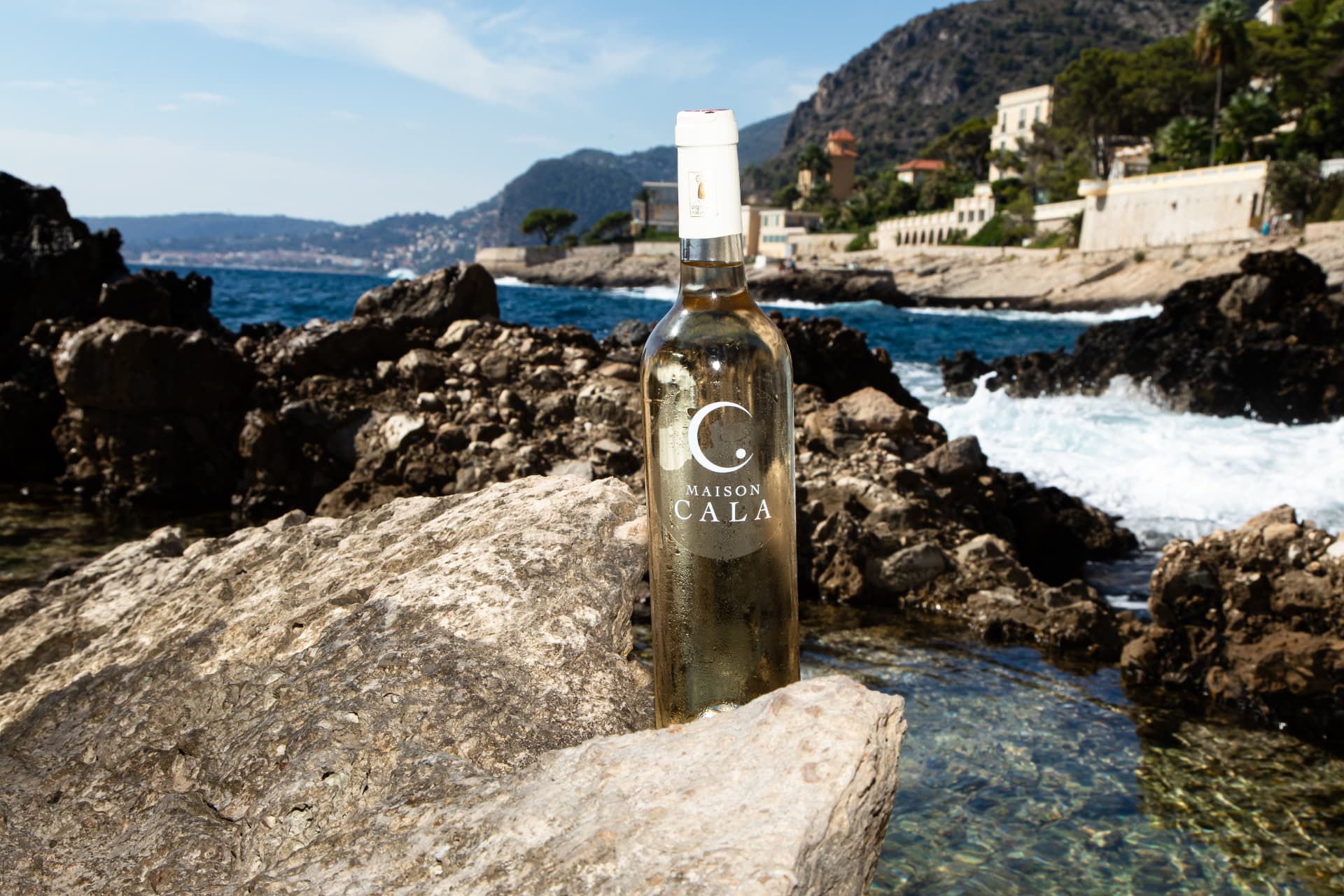
Maison Cala Rosé is produced with Domaine de la Périnade, an estate in Pezens, near Carcassonne, whose history dates back to 1830. According to the estate, Domaine de la Périnade obtained HVE certification in 2022.
Maison Cala, founded in 2026, is a brand. It does not own the estate and does not itself hold HVE certification. The certification belongs to Domaine de la Périnade as an agricultural holding.
Maison Cala Rosé is not certified organic, and we make no claim beyond what the estate's certification covers.
Learn more on our terroir page and our winemaking page.
39 € per bottle
Five Myths About HVE Certification
Myth 1
“HVE means organic.”
Reality: HVE is a separate scheme and does not ban synthetic products.
Myth 2
“HVE certifies the wine.”
Reality: It certifies the agricultural holding.
Myth 3
“Any brand linked to an HVE estate is HVE.”
Reality: Brands and buyers are not certified by association.
Myth 4
“HVE is just a marketing label.”
Reality: It is a government-backed scheme with independent audits.
Myth 5
“HVE certification lasts forever.”
Reality: It is granted for a period and must be renewed.
Frequently Asked Questions About HVE
- What does HVE mean on wine?
- HVE (Haute Valeur Environnementale, or High Environmental Value) is a French government-backed environmental certification for farms, including vineyards. It is the highest of three levels in France's environmental certification scheme and assesses a whole agricultural holding on four areas: biodiversity, plant-protection strategy, fertiliser management and water management. An independent, approved body audits the holding. HVE certifies the farm or estate and its practices — it is not an organic label, and it does not automatically apply to every brand or bottle linked to that estate.
- What does HVE stand for?
- Haute Valeur Environnementale — High Environmental Value in English.
- Is HVE wine organic?
- No. HVE is a separate certification. A wine is organic only if it is certified organic under EU rules.
- What are the four HVE criteria?
- Biodiversity, plant-protection strategy, fertiliser management and water management.
- Who awards HVE certification?
- Independent certification bodies approved by the French authorities, under a scheme overseen by the Ministry of Agriculture.
- Does HVE certify the winery or the wine?
- It certifies the agricultural holding — the farm or estate — not an individual wine or brand.
- Is HVE a government certification?
- Yes. It is part of France's official environmental certification scheme for farms.
- How can I check if a vineyard is HVE certified?
- Ask the producer for the certificate and check the Ministry of Agriculture's list of certified holdings.
- Is Maison Cala HVE certified?
- No. Maison Cala is a brand and does not hold HVE certification. Its production partner, Domaine de la Périnade, has held HVE certification since 2022.
- Is Maison Cala Rosé organic?
- No organic certification is claimed for Maison Cala Rosé.
Explore More Rosé Wine Guides
Sources
This guide is for general information and is not legal advice. Please enjoy responsibly. Sale of alcohol is reserved for adults of legal drinking age.