
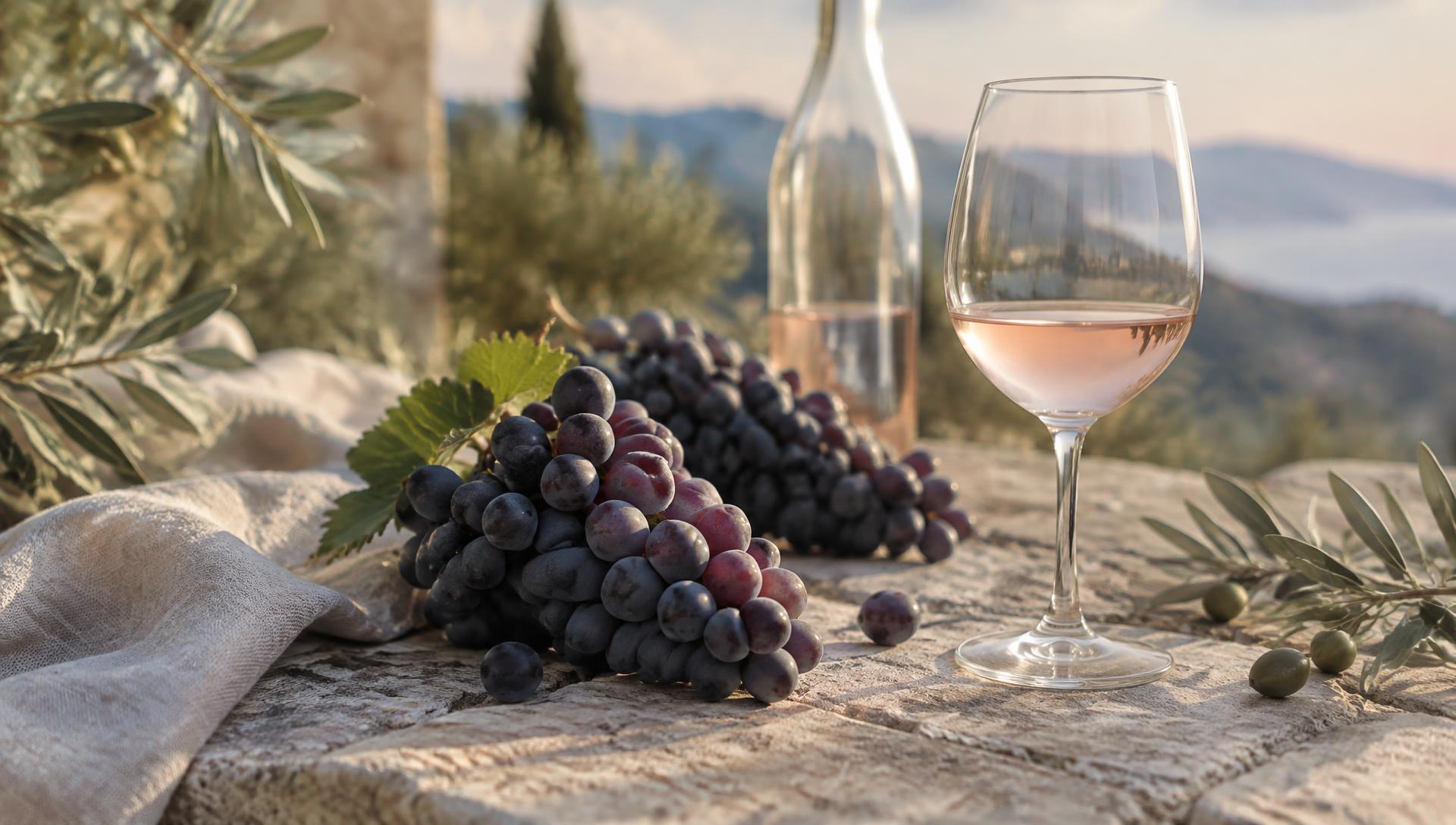
What is Grenache rosé?
Grenache rosé is a rosé wine made primarily or entirely from Grenache, a red grape widely grown in Mediterranean wine regions. Depending on where and how it is produced, Grenache rosé can show fresh red-fruit, citrus, floral and subtle spice characteristics. Its combination of fruit, freshness and versatility makes Grenache particularly well suited to rosé and Mediterranean food.
What is Grenache?
Grenache (Garnacha in Spain) is a red grape variety widely planted around the western Mediterranean, including Southern France and Spain. It generally thrives in warm, sunny and dry conditions.
It is used for red wines, blends and rosé. In red wines it is often associated with ripe red fruit and gentle spice; in rosé it can give fresh, aromatic and generous wines.
Why Grenache works for rosé
Grenache is often naturally light in colour for a red grape, which makes pale rosé styles achievable with only brief contact between juice and skins.
Its fruit expression — strawberry, raspberry and red berries are frequently described — can give rosé charm and roundness, while careful harvesting and winemaking help keep freshness. That balance of fruit and freshness is why Grenache is so often found at the heart of Mediterranean rosé.
What does Grenache rosé taste like?
Style varies with origin, harvest and winemaking, but Grenache rosé often displays:
- Aroma
- Red berries such as strawberry and raspberry, citrus, white flowers and sometimes a hint of spice or herbs.
- Palate
- Fresh, fruity and often gently rounded, with a soft texture rather than sharp acidity.
- Finish
- Usually clean and refreshing, sometimes with a light peppery or mineral note.
Is Grenache rosé dry or sweet?
Most Grenache rosés from Southern France are made in a dry style. Ripe fruit aromas can make a dry rosé seem soft or slightly sweet on the nose, even when little sugar remains.
Sweeter or off-dry rosés exist, so check the producer's description when sweetness matters to you.
What colour is Grenache rosé?
Colour depends mainly on how long the juice stays in contact with the grape skins. Grenache rosé can range from very pale pink, onion-skin or salmon tones to deeper raspberry shades.
A paler colour is a matter of style; it does not by itself indicate quality, sweetness or intensity of flavour.
How is Grenache rosé made?
Rosé is generally made from red grapes whose juice has only short contact with the skins. Common approaches include direct pressing, where grapes are pressed gently and the lightly tinted juice is run off straight away, and short maceration, where skins and juice rest together for a few hours before pressing.
The juice is then fermented much like a white wine. Producers make many further choices — harvest timing, temperature, ageing on lees, blending — that shape the final style.
Grenache rosé food pairing
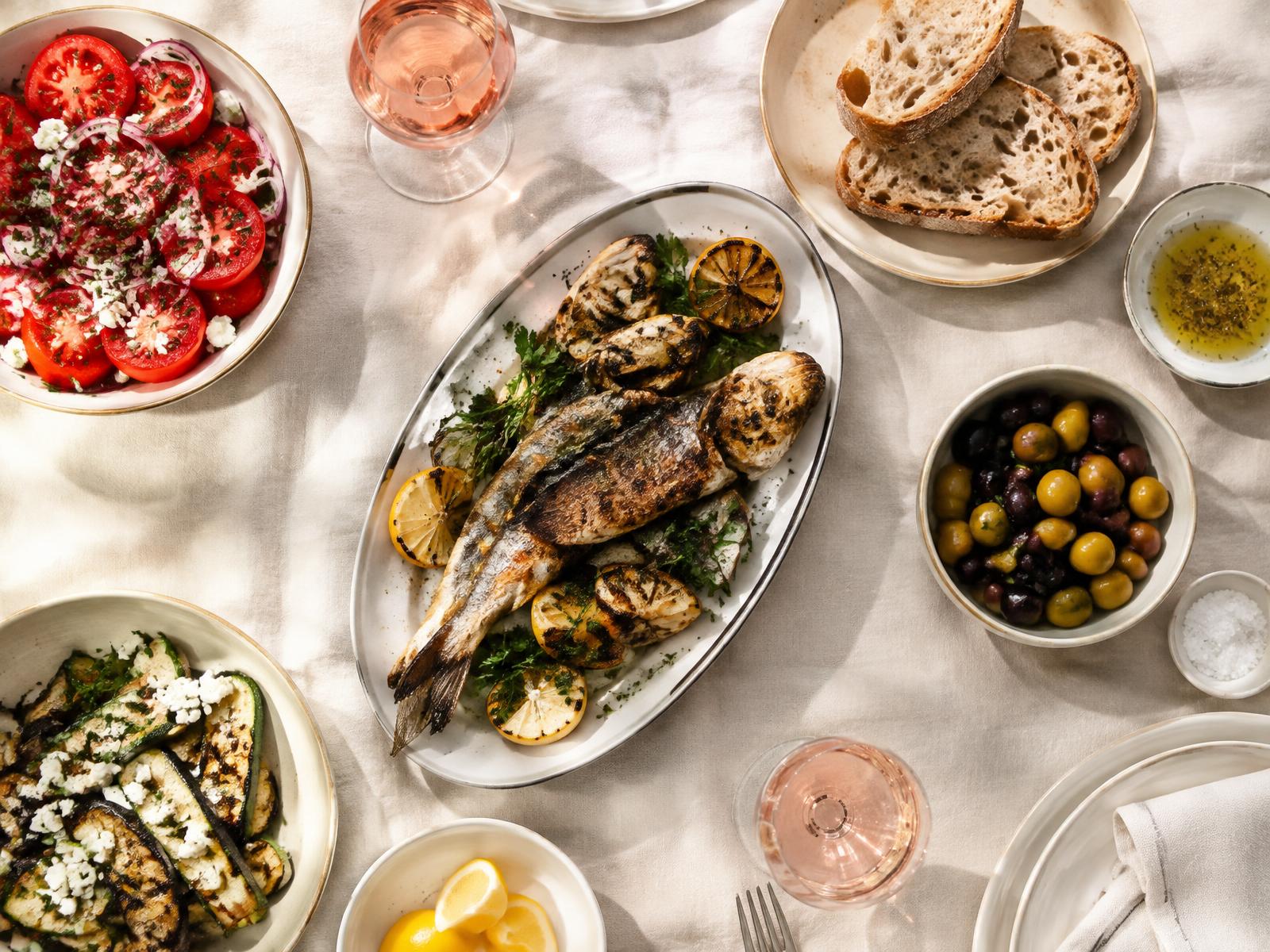
Seafood
Grilled fish, prawns, mussels and simply dressed shellfish often sit naturally beside a fresh Grenache rosé, where citrus and red-fruit notes can echo lemon and herbs.
Mediterranean food
Olives, tomatoes, grilled vegetables, olive oil, garlic and herbs such as thyme and rosemary are classic companions. Tapenade, ratatouille and socca are easy places to start.
Asian-inspired dishes
Lightly spiced dishes, sushi, Vietnamese summer rolls or Thai salads can work well with a dry rosé whose fruit softens gentle heat. Very hot chilli can overwhelm delicate wines.
Salads & summer dishes
Salade niçoise, burrata with tomatoes, melon with cured ham and herb-led salads suit the freshness of rosé.
Grilled food
Grilled chicken, lamb skewers, merguez and barbecued vegetables can pair well, especially with rosés that show a little more body and spice.
Aperitif
Served on its own or with a few olives, almonds or charcuterie, Grenache rosé is a natural aperitif wine.
Read the full guide: rosé wine food pairing
Grenache rosé serving temperature
Rosé is usually served chilled, commonly somewhere between about 8 and 14°C depending on style. Lighter, crisp rosés tend to suit the cooler end; rounder, more textured rosés often show more aroma a little warmer.
Maison Cala recommends serving Maison Cala Rosé at 12–14°C.
Read the guide: what HVE certification means
Should rosé be served ice-cold?
Very cold temperatures can mute aroma and flavour. Chill the bottle well, then let the glass warm slightly at the table if the wine seems closed.
On hot terraces an ice bucket helps keep the bottle at temperature between pours.
When to drink Grenache rosé
Most Grenache rosés are made to be enjoyed young, while fruit and freshness are at their most vivid — often within a few years of the vintage.
They suit long lunches, aperitifs, summer dinners, picnics, boats and celebrations, but nothing stops rosé being a year-round wine at the table.
Grenache rosé & the Mediterranean
Grenache and the Mediterranean grew up together: sun, dry summers and a cuisine of olive oil, herbs, seafood and vegetables.
That is why a glass of Grenache rosé so often feels at home on a Riviera terrace or a village table — wine and food from the same landscape.
Grenache vs other rosé grapes
Many rosés blend several grapes. In broad, general terms:
| Grape | Often brings to rosé |
|---|---|
| Grenache | Red-fruit generosity, roundness, aromatic charm |
| Cinsault | Lightness, delicacy and freshness |
| Syrah | Colour, structure and darker fruit or spice |
| Mourvèdre | Structure and savoury depth |
| Pinot Noir | Delicate red fruit and fine acidity |
Single-variety Grenache vs blended rosé
A rosé made from Grenache alone shows the grape's own personality clearly. Blends allow producers to add freshness, colour or structure from other varieties.
Neither is inherently better; it depends on the style the producer is looking for.
Maison Cala
Maison Cala Rosé
Maison Cala is a French rosé built around Grenache and the Mediterranean way of sharing wine. It is produced in Southern France — not in Provence.
On the nose: Raspberry · Redcurrant · Vine peach. On the palate: Fresh. Thirst-quenching. Beautifully rounded.
Maison Cala at a glance
- Wine type
- Rosé
- Country
- France
- Grape
- Grenache
- Production region
- Southern France
- Bottle size
- 75 cl
- Vintage
- 2024
- Serving temperature
- 12–14°C
Grenache rosé for yachts
Fresh, versatile and easy with seafood, Grenache rosé is a natural choice on board. See Maison Cala for yachts and Antibes.
Grenache rosé for weddings
From the welcome drink to a long dinner, rosé works across a wedding weekend. See weddings on the French Riviera.
Explore the Riviera: French Riviera · Monaco · Cannes · Nice · Saint-Tropez
Frequently asked questions
What is Grenache rosé?
Grenache rosé is a rosé wine made primarily or entirely from Grenache, a red grape widely grown in Mediterranean wine regions. Depending on where and how it is produced, Grenache rosé can show fresh red-fruit, citrus, floral and subtle spice characteristics. Its combination of fruit, freshness and versatility makes Grenache particularly well suited to rosé and Mediterranean food.
Is Grenache good for rosé?
Yes. Grenache is one of the grapes most widely used for rosé around the Mediterranean, valued for its red-fruit expression, roundness and naturally light colour.
Is Grenache rosé dry or sweet?
Most Grenache rosés from Southern France are dry, although ripe fruit can make them feel soft. Off-dry styles also exist.
What does Grenache rosé taste like?
It often shows red berries, citrus, floral notes and sometimes gentle spice, with a fresh and rounded palate. Style depends on origin and winemaking.
What food goes with Grenache rosé?
Seafood, Mediterranean dishes, salads, grilled food, lightly spiced dishes and aperitif snacks are all good matches.
What temperature should Grenache rosé be served at?
Usually chilled, roughly 8–14°C depending on style. Maison Cala Rosé is best served at 12–14°C.
Is Maison Cala a Provence rosé?
No. Maison Cala is a French Grenache rosé produced in Southern France. It is not a Provence or Côtes de Provence wine.
Where can I buy Maison Cala?
Maison Cala Rosé can be ordered online, and verified venues are listed on the Where to Buy page.
CALA CLUB
Join the Maison Cala circle
Private events, new releases and the next stories from the Carnet.
Join CALA CLUBSee the complete French Rosé Wine Guide for grapes, regions and styles, or explore Languedoc rosé and whether rosé is dry or sweet.
Continue reading
- How to Serve Rosé Wine
- Rosé Wine Food Pairing: What to Eat with Rosé
- How Many Bottles of Wine Do You Need for an Event?
- Rosé Wine for Yachts
- Rosé Wine for a French Riviera Wedding
- Wine for a Wedding
- The Mediterranean Apéritif
- Rosé Wine Serving Temperature
- How Long Does Rosé Wine Last?
- French Rosé Wine: A Complete Guide
- Languedoc Rosé Wine: A Complete Guide
- Is Rosé Wine Dry or Sweet?
- How Is Rosé Wine Made?
- Rosé Wine with Seafood: What Pairs Best?
- What Does HVE Certification Mean for Wine?