
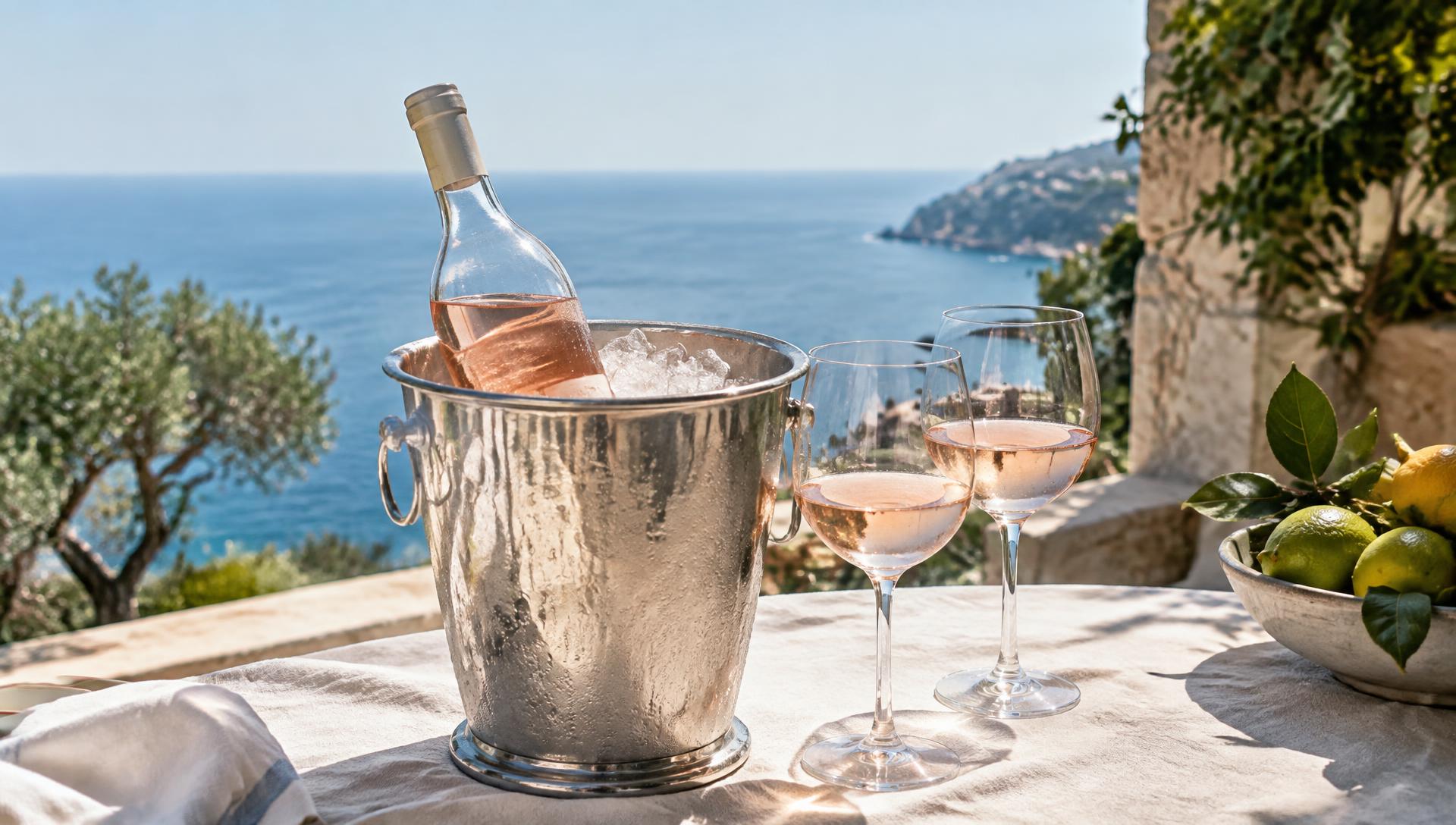
How should rosé wine be served?
Rosé wine is usually best served chilled, often somewhere around 8–12°C depending on style, in a clean stemmed wine glass. Chill it in the fridge for a few hours or in an ice bucket filled with ice and water for about 20–30 minutes. Keep the bottle cool between pours, and recork and refrigerate any leftover wine.
Quick serving guide
- Temperature
- Usually about 8–12°C, depending on style.
- Glass
- A clean, stemmed white-wine glass.
- Chilling
- A few hours in the fridge, or 20–30 min in ice and water.
- Outdoors
- Keep bottles and buckets in shade.
- After opening
- Recork, refrigerate, enjoy within around 2–4 days.
- Ice in the wine?
- Personal choice — it dilutes the wine.
Ideal rosé serving temperature
Most rosés show well between about 8 and 12°C. Light, crisp styles often suit the cooler end, while rounder, more textured rosés can open up a little warmer — some producers recommend up to around 14°C.
Always check the producer's own guidance where it exists: it reflects how that particular wine was made to be enjoyed.
For a detailed temperature guide, see Rosé Wine Serving Temperature.
Should rosé be served ice-cold?
Not usually. Extreme cold dulls aroma and flavour, so a rosé served straight from a very cold freezer or packed in ice for hours can taste of very little.
Serve it well chilled rather than ice-cold, and let a glass warm slightly if the wine seems closed.
How long to chill rosé
From room temperature, a bottle typically needs around two to three hours in a household fridge, depending on the fridge and the starting temperature.
Chilling it the day before and taking it out a few minutes before serving is the simplest approach.
How to chill rosé quickly
The fastest everyday method is an ice bucket filled with plenty of ice and cold water: water surrounds the bottle completely and cools it much faster than ice alone.
A handful of salt in the ice water can speed things further. Turning the bottle gently every few minutes also helps.
How long in an ice bucket?
In a well-filled bucket of ice and water, a room-temperature bottle often reaches serving temperature in roughly 20–30 minutes.
An already-chilled bottle simply needs the bucket to stay cool between pours. Lift it out from time to time if it starts to become too cold.
Can you put rosé in the freezer?
For a short time, yes — roughly 20–30 minutes can bring a bottle down quickly. Set a timer.
Left too long, the wine can freeze, expand and push out the cork or crack the bottle. Never leave a bottle in the freezer overnight.
Ice bucket service
Fill the bucket with ice and water up to the shoulder of the bottle. Keep a napkin nearby to dry the bottle before pouring, and place the bucket in shade.
For long lunches or outdoor service, keep extra ice ready and drain meltwater if the bucket overfills.
What glass for rosé?
A clean, stemmed white-wine glass works well for most rosés. The stem keeps warm hands away from the wine, and a bowl that narrows slightly at the top gathers the aroma.
Outdoors or on boats, sturdy stemware or quality unbreakable glasses may be more practical. What matters most is that the glass is clean and free of detergent smells.
Should you put ice in rosé?
It is a matter of personal taste. On very hot days some people enjoy rosé with an ice cube, but melting ice dilutes the wine and softens its flavour.
If you prefer ice, use large, clean cubes that melt slowly and add them just before drinking. For finer rosés, chilling the bottle is usually the better choice.
How much to pour
A standard serving is often around 125 ml, and a 75 cl bottle gives roughly six such glasses.
Filling a glass about one-third full leaves room for aroma and keeps the wine cooler, since you can top up from a chilled bottle.
Should you open the bottle before serving?
Rosé generally does not need to breathe. Open it just before serving so it stays fresh and cold.
Serving rosé at lunch
Lunch is rosé's natural moment. Chill bottles in advance, keep one on the table in a bucket, and pair with salads, seafood and Mediterranean dishes. Offer water alongside.
Serving rosé at dinner
At dinner, rosé works as an aperitif and with lighter courses. A slightly less cold serving temperature can let a rounder rosé show more texture with food.
Serving rosé outdoors
Heat is the main challenge outside. Keep reserve bottles in a cool box with ice and water, keep the serving bucket in shade, and pour small amounts more often.
Serving rosé at a party
Plan quantities before the event, chill more bottles than you think you need and rotate them from a cold reserve into service. A dedicated drinks station with buckets, glasses, water and napkins keeps things simple.
Serving rosé at a wedding
At weddings, rosé often features at welcome drinks, cocktail hour and summer dinners. Agree cold storage, ice and service timing with your caterer or venue, and plan a cold reserve for each phase of the day.
Serving rosé on a yacht
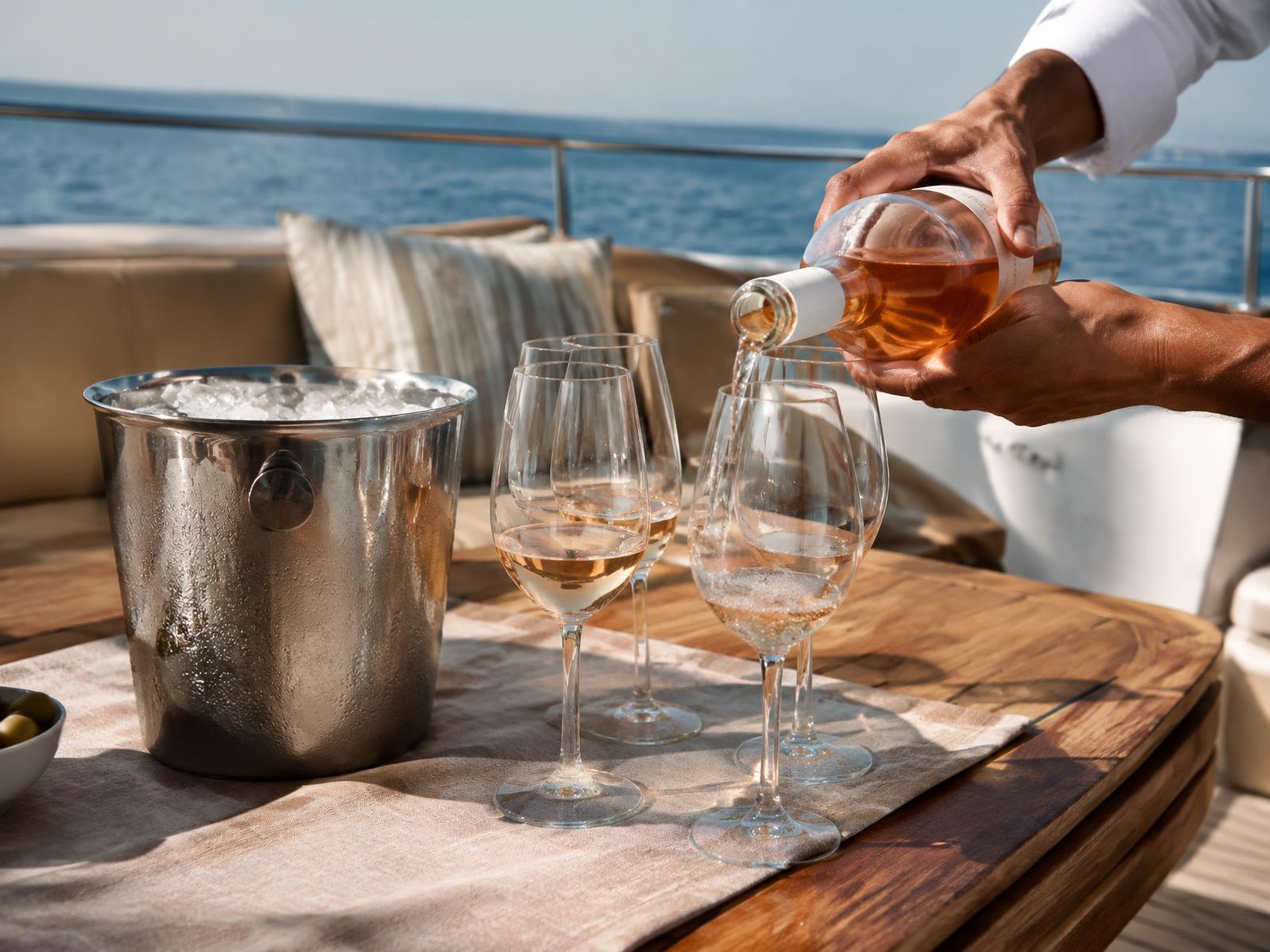
On deck, sun and wind warm wine quickly. Keep bottles in wine fridges or cool boxes below deck, serve from a shaded bucket, and use stable stemware suited to movement at sea.
Serving rosé at a beach club
High-volume beach service depends on cold reserve stock, plenty of ice and buckets that stay in shade. Bringing a fresh bottle in a bucket to the table keeps wine cool through long afternoons.
Serving rosé at a villa
At a villa, check fridge space before guests arrive, keep a cold reserve and set up a shaded drinks area near the pool or terrace. Concierges and private chefs can plan service around meals.
How to store opened rosé
Yes, opened rosé should go back in the fridge. Recork it or use a wine stopper and store it upright.
Kept this way, an opened rosé often stays enjoyable for around 2–4 days, although freshness and aroma fade gradually.
More detail in How Long Does Rosé Wine Last?
Can you serve rosé the next day?
Usually, yes, if it was resealed and refrigerated. Taste it first: if it seems flat or tired, it is better used for cooking.
How to transport rosé cold
Chill bottles fully before leaving, then pack them in an insulated bag or cool box with ice packs. Avoid leaving wine in a hot car.
Serving multiple bottles
For groups, keep one or two bottles in service and the rest sealed in a cold reserve. Replace bottles as they empty so every glass is poured cold.
Common serving mistakes
Serving it too warm
Warm rosé can taste heavy and alcoholic. On hot days a bottle warms quickly at the table.
Serving it excessively cold
Very cold wine tastes of little. If it seems mute, let the glass warm for a few minutes.
Using ice without considering dilution
Ice cubes in the glass dilute the wine as they melt; chill the bottle instead where possible.
Leaving bottles in the sun
Direct sun warms wine fast and is not kind to it. Keep bottles and buckets in shade.
Opening every bottle in advance
Open bottles as needed so the rest stay sealed and cold.
Running out of cold reserve stock
Chill more bottles than you think you need and rotate them into service.
Overfilling glasses
A glass about a third full stays cooler and lets the aroma gather.
Maison Cala
Serving Maison Cala Rosé
Maison Cala is a French Grenache rosé produced in Southern France — not a Provence rosé. Maison Cala Rosé 2024 is designed to be enjoyed in its youth, during the first three years.
- Wine
- French rosé
- Grape
- Grenache
- Bottle size
- 75 cl
- Produced in
- Southern France
- Recommended serving temperature
- 12–14°C
Before your guests arrive
- Maison Cala chilled
- Reserve bottles cold
- Ice ready
- Water added to ice buckets
- Glasses clean
- Bottle opener available if required by the closure
- Water available for guests
- Food ready
- Outdoor wine kept in shade
Please enjoy responsibly.
Serving fish or shellfish? Rosé wine with seafood · Hosting before dinner? The Mediterranean apéritif · Planning an event? Rosé on yachts · How many bottles do you need? · Private parties · Corporate events · French Riviera · Monaco · Saint-Tropez
Frequently asked questions
What temperature should rosé be served at?
Usually chilled, often around 8–12°C, with rounder styles sometimes served a little warmer. Follow the producer's guidance where available.
Should rosé be chilled?
Yes. Rosé is almost always served chilled, but not so cold that its aroma disappears.
How long does it take to chill rosé?
Around two to three hours in a fridge, or roughly 20–30 minutes in an ice bucket with ice and water.
Can you put rosé in the freezer?
Briefly, for about 20–30 minutes. Set a timer — a forgotten bottle can freeze and break.
What glass should I use for rosé?
A clean, stemmed white-wine glass suits most rosés.
Can you put ice in rosé?
You can, if you like it that way, but ice dilutes the wine. Chilling the bottle preserves flavour better.
How long does opened rosé last?
Often around 2–4 days, resealed in the fridge.
Should opened rosé go back in the fridge?
Yes. Reseal it and keep it refrigerated.
How do I keep rosé cold outside?
Use shaded ice buckets with ice and water, a cool box for reserve bottles, and pour smaller amounts more often.
What temperature should Maison Cala Rosé be served at?
Maison Cala recommends serving Maison Cala Rosé at 12–14°C.
Is Maison Cala a Provence rosé?
No. Maison Cala is a French Grenache rosé produced in Southern France. It is not a Provence or Côtes de Provence wine.
CALA CLUB
Join the Maison Cala circle
Private events, new releases and the next stories from the Carnet.
Join CALA CLUBSee the complete French Rosé Wine Guide for grapes, regions and styles.
Continue reading
- Grenache Rosé: A Guide to One of the Mediterranean’s Great Rosé Grapes
- Rosé Wine Food Pairing: What to Eat with Rosé
- How Many Bottles of Wine Do You Need for an Event?
- Rosé Wine for Yachts
- Rosé Wine for a French Riviera Wedding
- Wine for a Wedding
- The Mediterranean Apéritif
- Rosé Wine Serving Temperature
- How Long Does Rosé Wine Last?
- French Rosé Wine: A Complete Guide
- Languedoc Rosé Wine: A Complete Guide
- Is Rosé Wine Dry or Sweet?
- How Is Rosé Wine Made?
- Rosé Wine with Seafood: What Pairs Best?
- What Does HVE Certification Mean for Wine?