
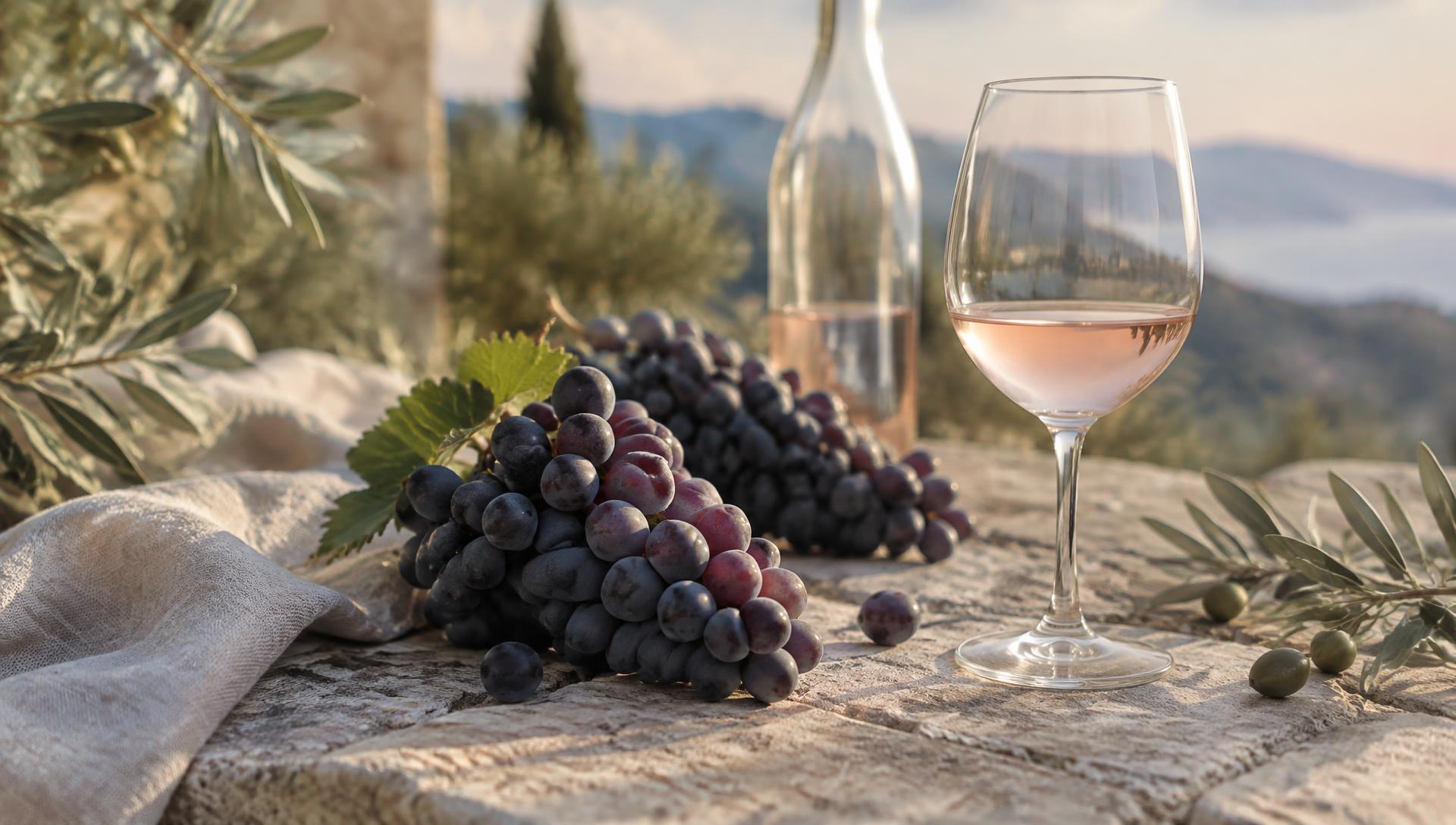
What Is Languedoc Rosé Wine?
Languedoc rosé is rosé wine made in the Languedoc, the large Mediterranean wine region of Southern France that runs from the Rhône delta towards Carcassonne and the Pyrenees. The word can mean two things: the geographic region, or the regulated AOP Languedoc designation, which only wines meeting its production rules may carry on the label.
Where Is Languedoc in France?
The Languedoc stretches along the Mediterranean coast of Southern France, roughly from Nîmes and Montpellier in the east, through Béziers and Narbonne, to Carcassonne in the west. Roussillon, around Perpignan, lies just to the south and is often grouped with it as Languedoc-Roussillon.
It is one of the largest vineyard areas in France, with landscapes ranging from coastal lagoons and plains to garrigue hillsides and the foothills of the Cévennes, the Montagne Noire and the Pyrenees.
Why Is Rosé Produced in Languedoc?
Several things make the region well suited to rosé:
- a Mediterranean climate with warm, dry summers and plenty of sunshine
- winds such as the Tramontane and the Cers, which dry the vines and help keep them healthy
- a long tradition of Mediterranean red grapes — the same grapes used for rosé
- a wide range of altitudes and exposures, giving winemakers options for freshness
Further west, around Carcassonne, Atlantic influences meet the Mediterranean, which can bring cooler nights and a slightly different balance.
Which Grapes Are Used in Languedoc Rosé?
Languedoc rosé is usually made from Mediterranean red varieties, alone or blended. The exact mix depends on the producer and, for appellation wines, on the rules of that appellation.
| Grape | What it often brings to rosé |
|---|---|
| Grenache | Red fruit, generous texture and Southern warmth; a backbone of many Languedoc rosés. |
| Cinsault | Lightness, delicacy and fresh red fruit. |
| Syrah | Colour, structure, darker fruit and a touch of spice. |
| Mourvèdre | Depth and savoury character. |
| Carignan | A historic Languedoc grape that can add freshness and structure. |
For the grape itself — its history and character — read our Grenache rosé guide.
The Terroir Behind Languedoc Rosé
Terroir is the combination of soil, climate, landscape and human practice in a place. The Languedoc has many of them: limestone and clay-limestone hillsides, schist, gravel terraces, sandstone and sandier soils near the coast and in some valleys.
Proximity to the sea, altitude and wind exposure all shape how grapes ripen. That diversity is one reason Languedoc rosés vary so widely.
See how this applies to one estate near Carcassonne on our terroir page.
How Is Languedoc Rosé Wine Made?
Languedoc rosé is made with the same methods used across France:
- Direct pressing — red grapes pressed gently so the juice takes only a little colour; often gives pale, delicate wines.
- Short maceration — juice left on the skins for a few hours before separation; usually more colour and body.
- Saignée — part of the juice drawn off early from a tank of red grapes and fermented as rosé.
Harvesting in the cool of the night or early morning and fermenting at controlled temperatures are common ways to preserve freshness in a warm region.
For one detailed example, read how Maison Cala Rosé is made.
For pressing, maceration and saignée explained, read How Is Rosé Wine Made?.
What Does Languedoc Rosé Taste Like?
There is no single Languedoc taste. Many are dry, with flavours such as:
- red fruit — strawberry, raspberry, redcurrant
- citrus and grapefruit
- peach and other stone fruit
- Mediterranean herbs and garrigue notes
Grenache- and Cinsault-led rosés tend to be fresh and fruity; blends with more Syrah or Mourvèdre are often deeper and more structured, suited to food.
Wondering about sweetness? Read Is Rosé Wine Dry or Sweet?.
AOP Languedoc, IGP Pays d'Oc and Other Wine Classifications
A wine made in the Languedoc region is not automatically "AOP Languedoc". French wines are labelled under one of several categories, each with its own rules:
| Category | What it means | In the Languedoc |
|---|---|---|
| AOP / AOC | Protected Designation of Origin. Strict rules on area, grape varieties, yields and methods. | AOP Languedoc covers red, white and rosé still wines, alongside many more local appellations. |
| IGP | Protected Geographical Indication. A defined area with broader rules on grapes and methods. | IGP Pays d'Oc covers a large part of the region; other local IGPs also exist. |
| Vin de France | Wine made in France without a protected geographical name. | Producers may choose this for flexibility in grapes or sourcing. |
The approved label is the only reliable guide to a specific wine's classification. Maison Cala's classification is shown on its approved bottle label; this guide does not assign it an appellation.
Languedoc Rosé vs Provence Rosé: What's the Difference?
Both are Mediterranean French rosé regions and share many grapes. The difference is mainly where the wine comes from and which rules apply.
| Languedoc | Provence | |
|---|---|---|
| Location | West of the Rhône, from Nîmes towards Carcassonne | East of the Rhône, between the Rhône and the Alps |
| Common grapes | Grenache, Cinsault, Syrah, Mourvèdre, Carignan | Grenache, Cinsault, Syrah, Mourvèdre, Tibouren |
| Styles | From pale and fresh to deeper and structured | Best known for pale, dry, delicate styles |
| Classifications | AOP Languedoc and local AOPs, IGP Pays d'Oc and others | AOP Côtes de Provence and other Provence appellations |
Neither is better by default; they are different places. A pale, dry rosé from the Languedoc is a Languedoc wine, not a Provence wine.
Maison Cala is produced near Carcassonne, in Southern France. It is not a Provence wine.
What Food Goes Well With Languedoc Rosé?
Regional cooking is a natural place to start:
- Bouzigues oysters and Mediterranean shellfish
- grilled sardines and fish à la plancha
- tielle sétoise (spiced octopus pie)
- tapenade, olives and anchovies
- grilled vegetables, ratatouille and herb salads
- goat's cheese such as Pélardon
- for deeper rosés: grilled lamb or chicken with herbs
For detailed pairings, read Rosé Wine Food Pairing.
How to Serve Languedoc Rosé
Most dry rosé is served chilled, generally around 8–12°C; fuller styles a little warmer. Many are made to be enjoyed young, and opened bottles usually keep for a few days in the fridge.
See our guides to serving temperature.
and how long rosé lasts.
Discover the Vineyards Around Carcassonne
Carcassonne marks the western edge of the Languedoc, where the Mediterranean and Atlantic climates meet. Vineyards here sit between the Montagne Noire to the north and the foothills of the Pyrenees to the south, along the Canal du Midi.
Pezens, a village just west of Carcassonne, is where Maison Cala Rosé is produced.
Domaine de la Périnade — A Family Vineyard Since 1830
According to the estate, Domaine de la Périnade's history dates back to around 1830, when Hippolyte Arnal founded the property between the Canal du Midi and the Fresquel. The Arnal family has run it for seven generations, across about 50 hectares, and the estate obtained HVE (High Environmental Value) certification in 2022.
Maison Cala works in partnership with the estate; it does not own it.
Read more on our terroir page.
Maison Cala
Maison Cala Rosé — French Grenache from Southern France
Maison Cala Rosé is a Grenache rosé produced in Pezens, near Carcassonne, at the western edge of the Languedoc.
Tasting: appearance — Pale pink; nose — Raspberry · Redcurrant · Vine peach; palate — Fresh. Thirst-quenching. Beautifully rounded..
- Wine
- Rosé
- Grape
- Grenache
- Vintage
- 2024
- Bottle
- 75 cl
- Produced in
- Pezens, near Carcassonne
- Serving
- 12–14°C
39 € per bottle
Frequently Asked Questions About Languedoc Rosé
- What is Languedoc rosé wine?
- Languedoc rosé is rosé wine made in the Languedoc, the large Mediterranean wine region of Southern France that runs from the Rhône delta towards Carcassonne and the Pyrenees. The word can mean two things: the geographic region, or the regulated AOP Languedoc designation, which only wines meeting its production rules may carry on the label.
- Where is the Languedoc wine region?
- On the Mediterranean coast of Southern France, roughly between Nîmes and Montpellier in the east and Carcassonne in the west.
- Is all rosé from Languedoc AOP Languedoc?
- No. AOP Languedoc is a regulated designation. Wines from the region may also be labelled under other AOPs, IGP Pays d'Oc, other IGPs or Vin de France.
- What is the difference between AOP Languedoc and IGP Pays d'Oc?
- AOP Languedoc has stricter rules on area, grapes, yields and methods. IGP Pays d'Oc covers a wider area with broader rules.
- Which grapes are used in Languedoc rosé?
- Mainly Grenache, Cinsault, Syrah, Mourvèdre and Carignan, alone or blended.
- Is Languedoc rosé dry?
- Many are dry, but check producer information if dryness matters to you.
- What does Languedoc rosé taste like?
- Often red fruit, citrus, stone fruit and Mediterranean herbs, from fresh and light to deeper and more structured.
- Is Languedoc rosé the same as Provence rosé?
- No. They are different regions with different appellations, although they share many grapes.
- What food goes with Languedoc rosé?
- Shellfish, grilled fish, tapenade, grilled vegetables, goat's cheese and, for deeper styles, grilled meat with herbs.
- What temperature should Languedoc rosé be served at?
- Generally around 8–12°C for most dry rosé; fuller styles a little warmer.
- Is Carcassonne in the Languedoc?
- Yes. Carcassonne lies at the western edge of the Languedoc.
- Where is Maison Cala Rosé produced?
- In Pezens, near Carcassonne, in Southern France, in partnership with Domaine de la Périnade.
- Is Maison Cala a Provence rosé?
- No. Maison Cala is produced near Carcassonne and is not a Provence wine.
- What appellation is Maison Cala Rosé?
- Its classification is shown on the approved bottle label. This guide does not assign it an appellation.
Explore More French Wine Guides
Sources
Please enjoy responsibly. Sale of alcohol is reserved for adults of legal drinking age.