
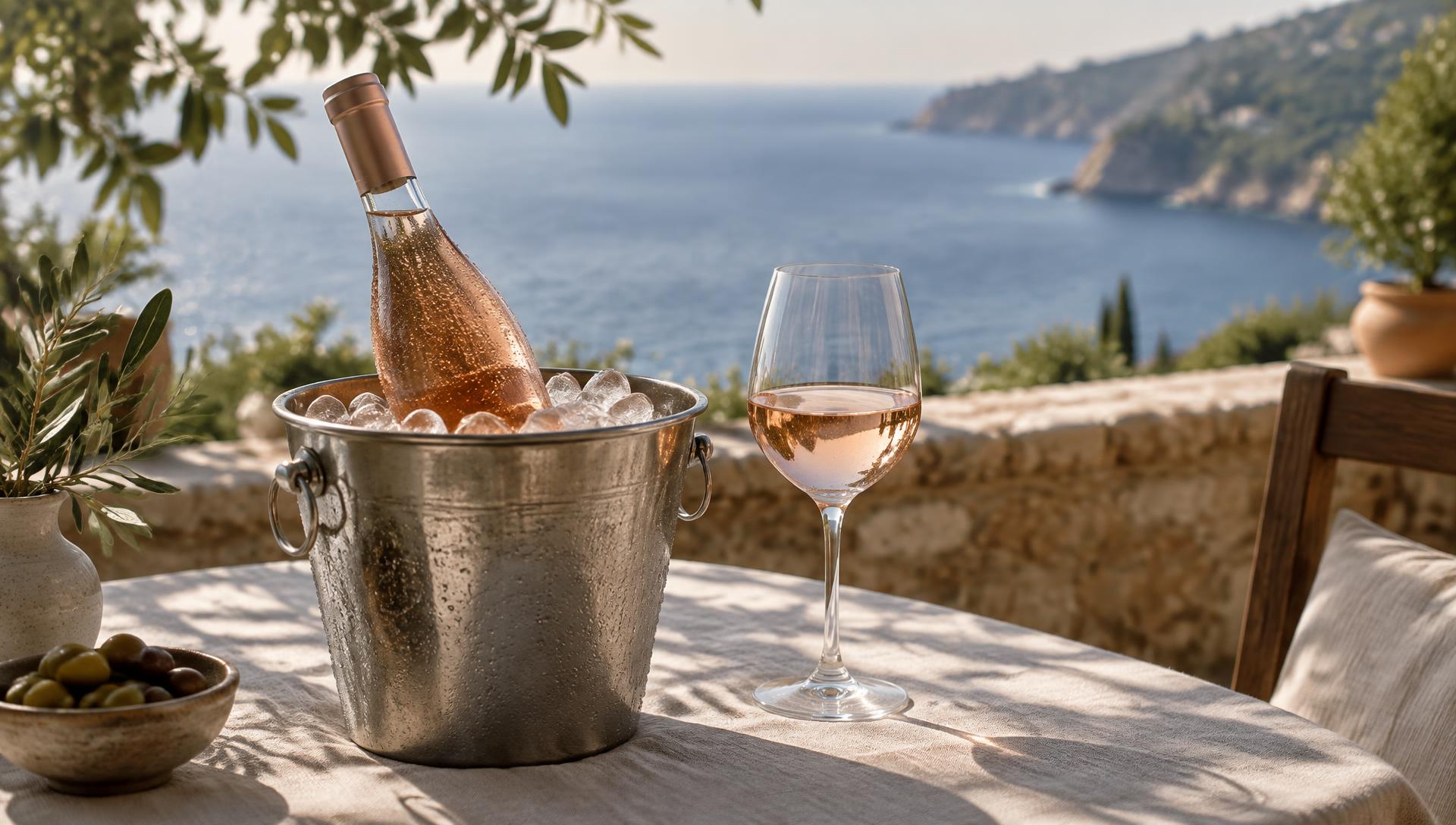
Ideal rosé serving temperature
Most dry rosé wines are generally best served at approximately 8–12°C (46–54°F). Lighter, fresher rosés can often be served toward the cooler end of the range, while fuller, more structured styles may show more aroma and texture slightly warmer.
These are general guidelines rather than universal rules. Follow the producer’s specific recommendation when available.
Rosé serving temperature in Celsius and Fahrenheit
| Celsius | Fahrenheit |
|---|---|
| 8°C | 46°F |
| 9°C | 48°F |
| 10°C | 50°F |
| 11°C | 52°F |
| 12°C | 54°F |
Rosé temperature at a glance
Light, crisp rosé
Around 8–10°C
Medium-bodied dry rosé
Around 9–11°C
Fuller, more structured rosé
Around 10–12°C
Wine style varies, so these ranges should be treated as practical guidance rather than strict rules.
Why does serving temperature matter?
Temperature changes the way a wine is perceived. The same rosé can seem quite different at 6°C and at 13°C.
At lower temperatures:
- aromas may appear quieter
- freshness can feel more pronounced
- sweetness may seem less obvious
- alcohol may seem less prominent
At warmer temperatures:
- aromas may become more expressive
- texture becomes easier to perceive
- alcohol can become more noticeable
These effects vary from wine to wine, so treat them as tendencies rather than exact rules.
Can rosé be served too cold?
Yes. A rosé served extremely cold can temporarily seem less aromatic and less expressive.
Very low temperatures suppress how much aroma we perceive. As the wine warms naturally in the glass, fruit and texture often become more noticeable.
If a wine is too cold, there is no need to warm it aggressively. Simply pour it and give it a few minutes in the glass.
Is 5°C too cold for rosé?
For many rosé wines, 5°C is colder than the ideal drinking temperature. The wine may still be refreshing, but aromas and flavour can be muted until it warms slightly.
A bottle can be stored or chilled colder than this for a while. Storage and chilling temperature are not always the same as serving temperature, and the gap closes quickly once the wine is poured.
What happens if rosé is served too warm?
Depending on style, a rosé served too warm may feel:
- less refreshing
- broader
- more alcoholic
- less precise
This is about taste and enjoyment, not safety. A short spell in the fridge or an ice-water bucket brings it back.
Should rosé be served straight from the fridge?
It can be. A household fridge is often colder than the ideal serving temperature, but fridges vary, so there is no single figure that applies to every kitchen.
A bottle straight from a very cold fridge can be poured immediately and will usually become more expressive after a few minutes in the glass. If you prefer, take it out shortly before serving.
Fridge temperature is not always serving temperature.
Refrigerators are designed for food storage, not specifically for wine service. A bottle stored cold warms slightly between the fridge, the table and the glass.
This is normal. A wine does not need to stay at exactly one temperature throughout service — it is meant to evolve a little as you drink it.
How long should rosé chill before serving?
From room temperature in a standard refrigerator, approximately 2–3 hours is a reasonable starting estimate.
Timing varies with:
- starting temperature
- fridge temperature
- bottle size
- air circulation
- shelf position
For broader chilling methods, see How to Serve Rosé Wine.
Need to chill rosé faster?
An ice-water bucket usually chills a bottle faster than ice alone, because cold water surrounds more of the bottle's surface. Expect approximately 15–30 minutes, depending on starting temperature and conditions.
Full chilling guidance lives in How to Serve Rosé Wine.
How quickly does rosé warm in the glass?
There is no universal number. It depends on:
- air temperature
- sun exposure
- glass size
- pour size
- wind
- indoor or outdoor setting
Pour smaller amounts more frequently in hot outdoor conditions.
This helps keep each glass at a pleasant temperature without overfilling.
Serving rosé outdoors
On a terrace, in a villa garden, at a wedding, a beach club or on a yacht, a bottle that starts at the right temperature can warm quickly.
- Pre-chill bottles well before guests arrive
- Keep reserve stock cold
- Return the bottle to the bucket between pours
- Keep wine shaded and out of direct sunlight
- Serve progressively rather than all at once
Hosting before dinner? See the Mediterranean apéritif. On board, see rosé for yachts; for celebrations, wine for a wedding.
What about very hot weather?
In hot Mediterranean conditions, it can make sense to begin service toward the cooler end of the suitable range, because the wine will warm naturally once poured.
There is no need to go to extremes: don't freeze wine, and don't aim for icy temperatures to compensate.
Use an ice bucket to maintain temperature, not freeze the wine.
Fill the bucket with ice and cold water. The water increases contact with the bottle and keeps it evenly cool.
Return the bottle between pours, and refresh melting ice during longer service. If the wine is becoming excessively cold, lift it out for a while rather than leaving it submerged.
Wine cooler or ice bucket?
Ice-water bucket
Best when the wine still needs active chilling.
Insulated wine cooler
Useful when the bottle is already at serving temperature and mainly needs to stay cool.
Do you need a wine thermometer?
Usually not for casual service, but it can be useful when precise temperature matters — for example at a tasting or a large event.
- contact thermometers
- infrared tools
- bottle-sleeve thermometers
For normal hosting, a good chilling routine and the feel of the bottle in your hand are usually enough.
Temperature by rosé style
| Rosé style | General serving range | Why |
|---|---|---|
| Very light / crisp dry rosé | 8–10°C | Emphasises freshness |
| Medium-bodied dry rosé | 9–11°C | Balances freshness and aroma |
| Fuller / structured rosé | 10–12°C | Allows more aroma and texture |
| Sweet rosé | Varies by style | Usually served chilled; producer guidance preferred |
| Sparkling rosé | Handled separately | Typically cooler than still rosé |
Practical guidance, not a formal or universal standard.
What about sparkling rosé?
Sparkling rosé is generally served cooler than many still rosés. This guide focuses on still rosé; for sparkling wines, follow the producer's guidance.
What temperature should Grenache rosé be served at?
Grenache rosé ranges from very light and fresh to more structured styles, so there is no single correct temperature. A general dry-rosé range of approximately 8–12°C is a useful starting point: delicate styles toward the cooler end, more expressive styles slightly warmer. Producers may recommend a little warmer still for their own wine.
More on the grape in our Grenache rosé guide.
Food can influence serving temperature too.
A chilled rosé served with seafood, sushi, salads or Mediterranean vegetables may work very well toward the fresher end. More structured dishes may suit a rosé allowed to warm slightly.
Rosé at apéritif
For an outdoor apéritif, begin well chilled; the wine will gradually warm in the glass. Rather than adding ice to the wine purely to manage temperature, which dilutes it, keep the bottle cold and pour smaller amounts.
Common rosé temperature mistakes
Serving from near-freezing temperatures
Very cold wine can taste muted until it warms in the glass.
Leaving the bottle in direct sun
A bottle in the sun warms quickly. Keep it shaded.
Keeping every bottle in an aggressive ice bath
Hours in ice and water can make wine colder than it needs to be.
Bringing all event bottles out at once
Reserve stock warms before it is needed. Rotate bottles from a cold reserve.
Treating one exact temperature as mandatory
Wine naturally changes in the glass. A range is more useful than a single number.
Rosé Temperature Converter
Is your rosé ready to serve?
Enter a temperature to check.
General guidance only.
Maison Cala
Maison Cala serving temperature
Maison Cala Rosé is a French Grenache rosé produced in Southern France. Maison Cala recommends serving it at 12–14°C — slightly above the general 8–12°C range for dry rosé, which is the producer’s own guidance for this wine.
On a hot day, start at the cooler end of that range; the wine will warm in the glass.
Serve Maison Cala well chilled.
Discover Maison Cala Rosé and the latest verified serving guidance.
For glassware, ice buckets, opened bottles and complete service guidance, read How to Serve Rosé Wine. Planning quantities? See how many bottles you need. Storing leftovers? Read how long rosé lasts.
Frequently asked questions
- What is the ideal temperature for rosé wine?
- Most dry rosé wines are generally best served at approximately 8–12°C (46–54°F), with lighter styles toward the cooler end and fuller styles slightly warmer.
- What temperature should rosé be served at in Celsius?
- Approximately 8–12°C for most dry rosé. Follow the producer's recommendation when available.
- What temperature should rosé be served at in Fahrenheit?
- Approximately 46–54°F for most dry rosé.
- Should rosé wine be chilled?
- Yes. Rosé is generally served chilled, cool enough to feel fresh but not so cold that its aromas disappear.
- Should rosé be served ice cold?
- Usually not. Very cold rosé can taste muted. Well chilled is generally better than ice cold.
- Can rosé be too cold?
- Yes. Extremely cold rosé can temporarily seem less aromatic and less expressive until it warms in the glass.
- Is 5°C too cold for rosé?
- For many rosés, 5°C is colder than ideal. The wine can still be refreshing, but aromas may be muted until it warms slightly.
- Can rosé be served too warm?
- Yes. Too warm, rosé may feel less refreshing, broader and more alcoholic. It is a matter of taste, not safety.
- Should rosé be served straight from the fridge?
- It can be. A fridge may be colder than the ideal serving temperature, so the wine may become more expressive after a few minutes in the glass.
- How long should rosé chill in the fridge?
- From room temperature, approximately 2–3 hours is a reasonable starting estimate. Timing varies with the fridge and bottle.
- How quickly can you chill rosé in an ice bucket?
- In ice and cold water, approximately 15–30 minutes, depending on starting temperature and conditions.
- What temperature should Grenache rosé be served at?
- Approximately 8–12°C is a useful general starting point, with delicate styles cooler and more expressive styles slightly warmer. Follow the producer's guidance where available.
- How do you keep rosé at the right temperature outside?
- Pre-chill bottles, keep reserve stock cold, use an ice-water bucket in the shade, return the bottle between pours and pour smaller amounts more often.
- What temperature should rosé be served at a wedding?
- The same general range applies, approximately 8–12°C for most dry rosé. Plan cold storage and a cold reserve for each part of the day, as bottles warm quickly outdoors.
- What temperature should rosé be served on a yacht?
- The same general range applies. On deck, sun and wind warm wine quickly, so start well chilled, keep bottles shaded and serve from an ice-water bucket.
- What temperature should Maison Cala Rosé be served at?
- Maison Cala recommends serving Maison Cala Rosé at 12–14°C.
Cold enough to refresh. Warm enough to express.
For many dry rosé wines, approximately 8–12°C offers a useful starting point—cool enough for freshness while still allowing aroma, fruit and texture to show.
See the complete French Rosé Wine Guide for grapes, regions and styles.
Continue reading
- Grenache Rosé: A Guide to One of the Mediterranean’s Great Rosé Grapes
- How to Serve Rosé Wine
- Rosé Wine Food Pairing: What to Eat with Rosé
- How Many Bottles of Wine Do You Need for an Event?
- Rosé Wine for Yachts
- Rosé Wine for a French Riviera Wedding
- Wine for a Wedding
- The Mediterranean Apéritif
- How Long Does Rosé Wine Last?
- French Rosé Wine: A Complete Guide
- Languedoc Rosé Wine: A Complete Guide
- Is Rosé Wine Dry or Sweet?
- How Is Rosé Wine Made?
- Rosé Wine with Seafood: What Pairs Best?
- What Does HVE Certification Mean for Wine?