
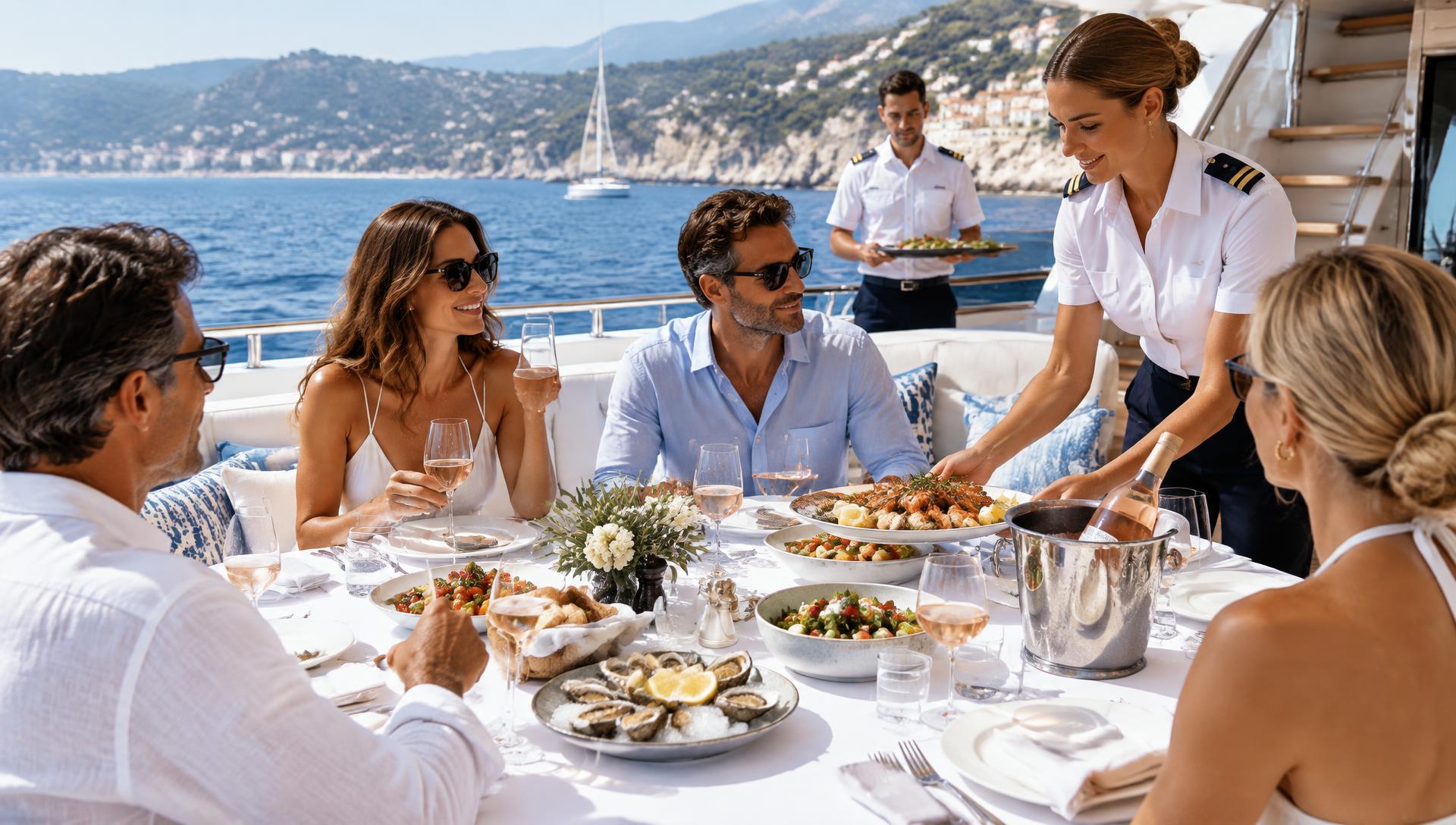
Why is rosé popular on yachts?
Rosé works especially well on yachts because it suits sunshine, seafood, Mediterranean lunches and relaxed deck service. Serve it well chilled, keep bottles out of direct sun, use ice buckets with ice and water, and plan quantities around guests, itinerary, meals and the other drinks on board.
Quick yacht guide
- Best moments
- Deck lunches, beach setups, sunset aperitifs
- Serving
- Well chilled, in shade
- Keep cold
- Ice and water, rotate bottles
- Glassware
- Stable stemware or quality unbreakable glasses
- Pairs with
- Seafood, salads, Mediterranean dishes
- Plan by
- Guests × meals × itinerary
Why rosé works on yachts
Yacht hospitality happens in sunshine, by the sea and often around long lunches. Rosé fits naturally: it is served chilled, refreshing in warm weather and versatile with the seafood, salads and Mediterranean dishes typical of onboard menus.
It also bridges preferences — guests who lean towards white or red will often happily share a bottle of rosé on deck.
Choosing rosé for a yacht
Consider the guests' preference sheet, the menu, the itinerary and the style of service. A dry, versatile rosé tends to work across lunch, aperitif and dinner. Bottle availability for the whole trip and the ability to restock in port matter as much as taste.
Dry vs sweeter rosé
Most guests at a Mediterranean table expect a dry rosé, which pairs more easily with food. Sweeter styles can suit some palates and spicy dishes, but are less versatile across a full charter menu.
Grenache rosé onboard
Grenache is one of the Mediterranean's classic rosé grapes. Grenache rosés often show red-fruit character and a generous texture, depending on how they are made — a style that sits comfortably with deck lunches and grilled fish.
Serving temperature on board
Rosé is usually best served chilled, often around 8–12°C depending on style, with rounder styles sometimes a little warmer. On a hot deck, wine in the glass warms quickly, so pour smaller amounts more often.
Maison Cala recommends serving Maison Cala Rosé at 12–14°C.
Keeping rosé cold on deck
Keep bottles and buckets in shade, top up ice regularly and rotate bottles from the wine fridge into service rather than leaving one bottle out for a long lunch. Insulated bottle coolers help on open decks.
Ice buckets onboard
Fill buckets with ice and water to the shoulder of the bottle: water chills faster than ice alone. Use stable, non-slip buckets or holders, keep a napkin nearby and drain meltwater before it overflows on teak.
Glassware
Stemmed wine glasses suit formal dinners. On open decks, tenders and beaches, stable stemware or quality unbreakable glasses are often more practical. Whatever you choose, keep it clean, polished and free of detergent smells.
Yacht lunches
Lunch at anchor is rosé's natural moment. Pair with seafood, salads, grilled fish and Mediterranean dishes, keep water on the table and have a chilled reserve ready.
Dinner service
At dinner, rosé often works for aperitif and lighter courses, with other wines alongside richer dishes. Agree the wine order with the chef and the guests' preferences in advance.
Beach setups
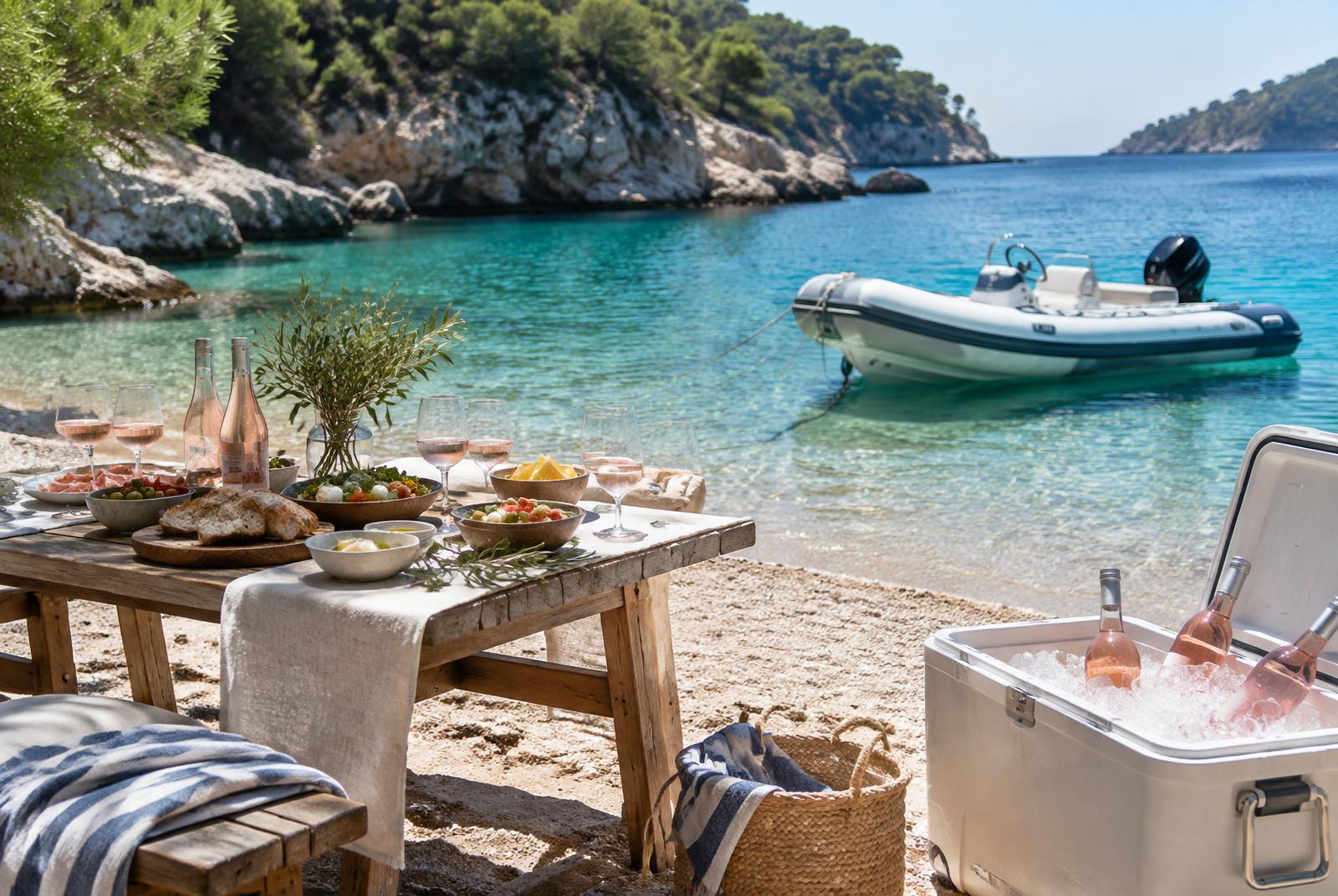
For beach or tender lunches, pack wine in cool boxes with ice and water, bring unbreakable glassware and plan shade. Keep bottles sealed until service and take every empty back on board.
Sunset service
A chilled rosé with small plates at sunset is a classic. Keep it simple: a bucket, a few bottles rotated from the fridge, and something savoury to eat.
Charter guests
Preference sheets are the starting point. Confirm favourite styles, any alcohol-free guests and special occasions before embarkation, and plan reserve stock for changing plans.
Owner trips
Owners often have established preferences and recurring trips. Keeping a record of what was served and enjoyed makes future provisioning easier.
VIP & special occasions
Birthdays, anniversaries and celebrations on board may call for larger formats, special presentation or extra stock. Plan these occasions as separate events.
Yacht parties
For parties on board, guest numbers, duration and the full bar list drive the quantity. Chilling capacity and storage space are usually the practical limits.
How much rosé to provision
Plan by guests × onboard meals × the role rosé plays, then adjust for the other drinks on board and the chance to restock in port. Use the Yacht Rosé Planner below as a starting point.
Yacht Rosé Planner
Estimated rosé planning range
60–72 bottles
This is an inventory-planning estimate, not a consumption recommendation. Actual requirements depend on guest preferences, itinerary, menu and the full beverage programme.
How the planner works
- Average rosé servings per guest, when rosé is the primary wine: 2 per lunch on board, 2.5 per dinner, 2 per beach or tender lunch, 3 per special event.
- Maison Cala's role: one of several wines ×0.6, occasional service ×0.3.
- Each other alcoholic drink on offer reduces rosé's share by 8%, to a minimum of 40%.
- Servings are converted at 5 × 150 ml per 75 cl bottle, then a planning range of ×1–1.2 is applied and rounded up.
Planning rosé for a seven-day charter
Embarkation — welcome drinks and a first dinner; usually moderate.
Lunches — often the main rosé moments of the week.
Dinners — rosé for aperitif and lighter courses, alongside other wines.
Beach day — plan a separate cool box and unbreakable glassware.
Special event — a celebration evening can need noticeably more.
Departure day — usually light; avoid opening new stock unnecessarily.
Chief stews can adjust each day according to the preference sheet and charter itinerary. Use the planner with your own figures.
Cold storage
Keep reserve stock in a wine fridge or cool, dark store, and move bottles into the service fridge a day ahead. Avoid storing wine near engines, galleys or in direct sun.
Storage onboard
Space is limited, so plan stock levels with the interior team. Secure cases against movement at sea, label stock areas and keep an inventory as bottles are used.
Transport between marina and yacht
Deliveries are usually coordinated with the crew or yacht agent. Keep cases shaded and cool on the dock, move them on board promptly and agree delivery windows around guest arrivals.
Provisioning
Provisioning lists are typically built from preference sheets and itinerary. Agree quantities, delivery location and timing with the captain, chief stew or provisioner. Availability and logistics are always confirmed case by case.
For captains
Captains coordinate itinerary, delivery and storage. Early notice of the cruising plan and port calls helps align wine deliveries with restocking opportunities.
For chief stews
Chief stews own the guest experience: preference sheets, service style, glassware and temperature. A versatile rosé simplifies service across lunches, beach days and sunset aperitifs.
For yacht managers
Managers look at consistency across trips and vessels. A clear record of preferences and stock simplifies recurring provisioning.
For provisioners
Provisioners need clear quantities, delivery details and timing. Our team can discuss availability for specific requests.
Mediterranean itineraries
French Riviera itineraries often combine Antibes, Cannes, Monaco and Saint-Tropez with anchorages in between. Plan wine stock around where restocking is practical and where guests will dine ashore.
Antibes
Antibes is a major yachting base. Plan deliveries around crew schedules and berth access.
Monaco
Monaco itineraries are often short and event-driven. Confirm delivery timing early during busy weeks.
Cannes
Cannes combines charters with busy festival and event periods; plan stock and delivery windows ahead of peak weeks.
Saint-Tropez
Saint-Tropez summers mean long lunches at anchor and beach days. Plan cool boxes and reserve stock.
Monaco Yacht Show
During Monaco Yacht Show week, yachts host guests and receptions on board. Maison Cala has no official connection with the event; our team can discuss availability for onboard hospitality that week.
Maison Cala
Maison Cala on board
Maison Cala is a French Grenache rosé produced in Southern France — not a Provence rosé — made for Mediterranean hospitality: deck lunches, beach days and sunset aperitifs. Availability and delivery are confirmed case by case.
- Wine
- French rosé
- Grape
- Grenache
- Produced in
- Southern France
- Vintage
- 2024
- Bottle size
- 75 cl
- Serving temperature
- 12–14°C
Please enjoy responsibly.
Request Maison Cala for your yacht
Frequently asked questions
Why is rosé popular on yachts?
It is served chilled, refreshing in warm weather and pairs easily with the seafood and Mediterranean dishes typical of onboard menus.
What is the best rosé for a yacht?
Usually a dry, versatile rosé that suits lunches, aperitifs and dinners — chosen around guests' preferences and the menu.
What temperature should rosé be served on a yacht?
Usually well chilled, often around 8–12°C depending on style. Keep bottles in shade and pour smaller amounts more often.
How do you keep rosé cold on deck?
Use ice buckets with ice and water, keep them in shade and rotate bottles from the wine fridge into service.
How much rosé for a seven-day charter?
It depends on guests, meals on board, rosé's role and other drinks. Use the Yacht Rosé Planner on this page as a starting point.
What glasses should be used on a yacht?
Stemmed glasses for formal dinners; stable stemware or quality unbreakable glasses on open decks and beaches.
What food goes with rosé on a yacht?
Seafood, grilled fish, salads, Mediterranean dishes and light lunches.
Can Maison Cala be delivered to a yacht?
Our team reviews each request and confirms availability and logistics case by case.
Is Maison Cala a Provence rosé?
No. Maison Cala is a French Grenache rosé produced in Southern France.
Continue reading
- Grenache Rosé: A Guide to One of the Mediterranean’s Great Rosé Grapes
- How to Serve Rosé Wine
- Rosé Wine Food Pairing: What to Eat with Rosé
- How Many Bottles of Wine Do You Need for an Event?
- Rosé Wine for a French Riviera Wedding
- Wine for a Wedding
- The Mediterranean Apéritif
- Rosé Wine Serving Temperature
- How Long Does Rosé Wine Last?
- French Rosé Wine: A Complete Guide
- Languedoc Rosé Wine: A Complete Guide
- Is Rosé Wine Dry or Sweet?
- How Is Rosé Wine Made?
- Rosé Wine with Seafood: What Pairs Best?
- What Does HVE Certification Mean for Wine?