
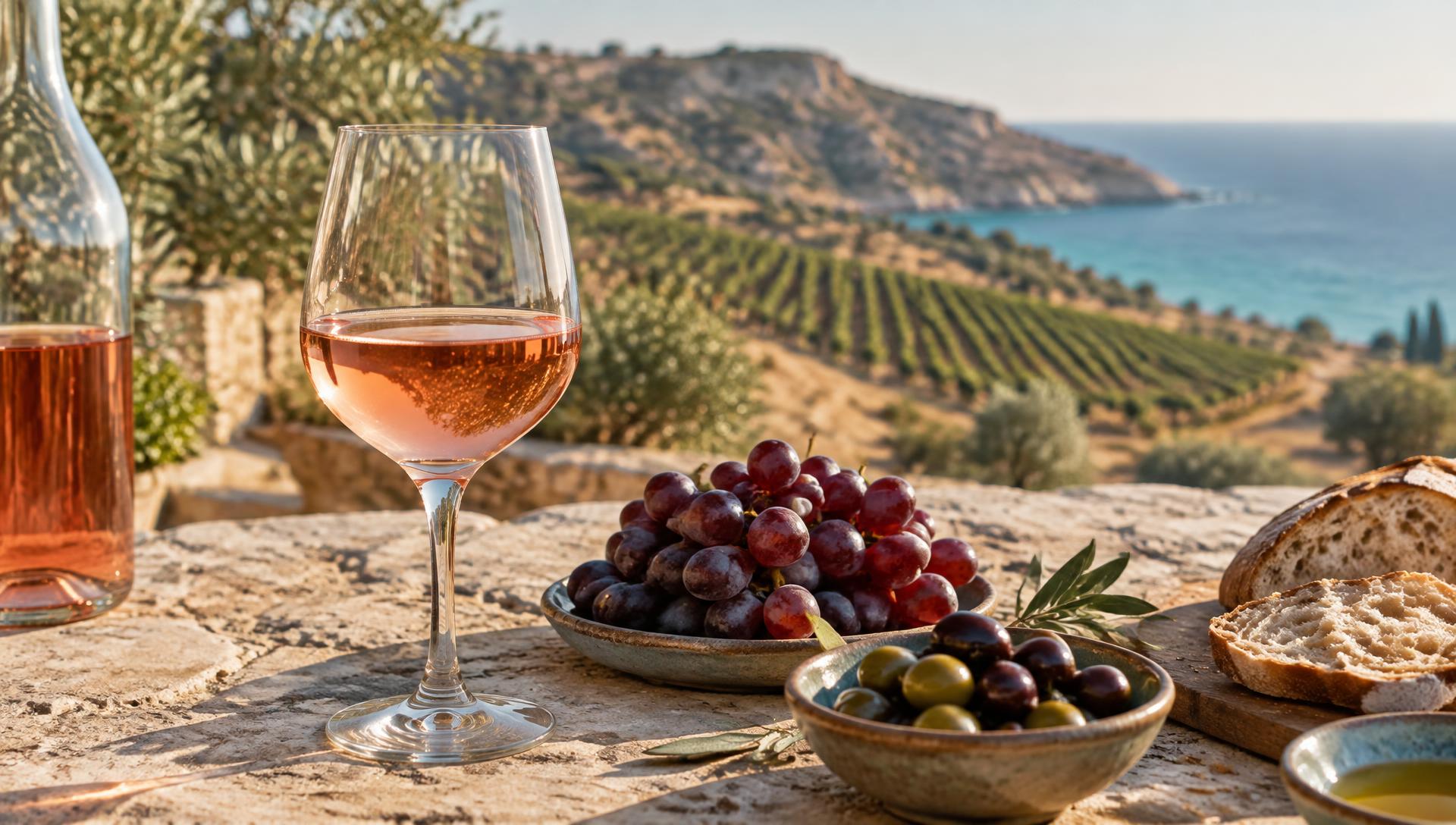
What is French rosé wine?
French rosé is rosé wine produced in France from red grape varieties using winemaking methods that limit the extraction of colour from the grape skins. It is made in many French regions, in styles ranging from very pale and delicate to deeper and more structured. Many French rosés are dry, but not all of them.
French rosé at a glance
- Country
- France
- Made from
- Red grape varieties
- Colour
- From very pale to deeper pink
- Sweetness
- Many are dry; some are off-dry or sweeter
- Common grapes
- Grenache, Cinsault, Syrah, Mourvèdre, Cabernet Franc, Pinot Noir, Gamay
- Regions
- Produced in several regions, not only Provence
- Serving
- Usually well chilled, often around 8–12°C
- Food
- Seafood, salads, vegetables, grilled dishes, Mediterranean food
What is rosé?
Rosé is wine made from red grapes with limited skin contact. The juice of most red grapes is almost colourless; the colour comes from the skins. By keeping contact between juice and skins short, winemakers produce a wine with a little colour and lighter structure than a red.
Rosé is not usually made by simply mixing red and white wine. In France this is generally not permitted for still rosé, with Champagne as a well-known exception for some rosé sparkling wines.
How is French rosé made?
Several methods are used. Production methods vary by producer, and a label does not always say which one was used.
Direct pressing
Red grapes are pressed gently and quickly, so the juice picks up only a little colour from the skins. This often produces pale, delicate rosé.
Short maceration
The juice stays in contact with the skins for a short time — often hours rather than days — before being separated. Longer contact generally means deeper colour and more structure.
Saignée
Meaning "bleeding", this method draws off part of the juice from a tank of red grapes early in red-wine making, and ferments it separately as rosé.
Why is rosé pink?
Rosé gets its colour from the grape skins. Colour depends on:
- grape variety
- how long the juice touches the skins
- pressing method
- ripeness
- winemaking choices
Shades range from very pale onion-skin and salmon to peach, pink and deeper raspberry tones.
Is pale rosé better?
No. Pale rosé is fashionable, and many excellent rosés are pale, but colour is a stylistic choice, not a quality score.
Deeper rosé is not automatically sweeter or lower in quality. Some darker rosés are dry, structured and made to accompany food. Judge a rosé by its balance, freshness and how it suits the moment — not its shade.
Is French rosé dry?
Many French rosés are dry, particularly those from Mediterranean regions. But not every French rosé is dry: some regions and styles produce off-dry or sweeter rosés.
If dryness matters to you, look for producer information, the word "sec" where used, or ask the retailer.
Learn more about dry rosé
Residual sugar and label terms are explained in Is Rosé Wine Dry or Sweet?.
Sweetness vs fruitiness
Fruity is not the same as sweet. A wine can smell of strawberry, peach or citrus and still contain very little sugar. Sweetness is about residual sugar; fruitiness is about aroma and flavour.
That is why a dry rosé can still taste generous and fruit-forward.
Which grapes are used for French rosé?
French rosé is made from many red grape varieties, often blended. Some of the most important:
Grenache
Widely associated with Mediterranean wine regions. Often linked to red fruit, generous texture and a warm-climate character, it is one of the most important grapes for French rosé.
Cinsault
Frequently used in Southern French rosé for its lightness, delicacy and fresh red-fruit expression.
Syrah
Can add colour, structure and darker fruit or spice to a rosé blend.
Mourvèdre
Can add depth, structure and savoury character, particularly in more serious Mediterranean rosés.
Cabernet Franc
Important in parts of the Loire Valley, where it can give rosé a fresh, sometimes herbal or crunchy red-fruit character.
Pinot Noir
Used for rosé in several cooler northern regions, often producing delicate, finely textured wines depending on region and style.
Gamay
Associated with Beaujolais and parts of the Loire, giving light, fruity, easy-going rosés.
Other permitted regional varieties are also used, depending on the region.
Grenache rosé
Grenache is one of the key grapes of Mediterranean rosé. It thrives in warm, sunny climates, and rosés made from it are often associated with red-fruit character, generous texture and a sense of Southern warmth balanced by freshness.
Grenache rosé is made in several French regions — it is not exclusive to Provence.
For more on the grape itself, read Grenache Rosé: a guide.
For pressing, maceration and saignée explained, read How Is Rosé Wine Made?.
Where is rosé made in France?
Rosé is produced across many French wine regions. Each brings its own grapes, climate and traditions, which is why French rosé covers such a wide range of styles.
Provence
Provence is one of the best-known French rosé regions and is often associated with pale, dry, delicate styles. It is an important rosé region — but only one part of French rosé.
Southern France
Southern France is a broad area that covers several wine regions with a Mediterranean influence. Grenache and other Mediterranean grapes are widely grown here, and the rosés vary from pale and fresh to fuller and more generous.
Rhône
The Rhône Valley produces rosé from grapes such as Grenache, Cinsault and Syrah. Styles range from fresh and fruity to deeper, more structured rosés.
Loire
The Loire Valley makes rosé in very different styles, from dry to off-dry, often from grapes such as Cabernet Franc, Gamay or Pinot Noir depending on grape and appellation.
Corsica
The Mediterranean island of Corsica produces rosé shaped by its own grape varieties, climate and landscape.
Languedoc / Roussillon
Languedoc and Roussillon form a large Mediterranean wine area producing a wide range of rosé styles, often from Grenache, Cinsault, Syrah and other regional varieties.
Go deeper with our Languedoc rosé guide.
Other French rosé
Rosé also appears in regions not immediately associated with Mediterranean wine, such as Bordeaux, Burgundy, Beaujolais and the South-West. The diversity of French rosé is part of its appeal.
French rosé vs Provence rosé
French rosé is the broad category: any rosé made in France. Provence rosé is a part of it — wine produced within Provence under the relevant regional and appellation rules.
So all Provence rosé is French rosé, but not all French rosé is Provence rosé.
Maison Cala is a French rosé produced in Southern France and should not be described as Provence rosé unless verified production information changes.
French rosé vs “Provence style”
People often use "Provence style" informally to describe rosé that is pale, dry, delicate and fresh. That style can be made in other places too.
A wine described as being in a pale, dry style is not necessarily from Provence. Origin is a matter of where a wine is made, not how it looks.
What does French rosé taste like?
French rosé can show a wide range of aromas and flavours, depending on grape, region and style:
- red fruit — strawberry, raspberry, redcurrant
- citrus — grapefruit, lemon
- stone fruit — peach, apricot
- floral notes
- herbal or mineral impressions
Lighter rosés tend to feel crisp and delicate; fuller ones show more texture and depth.
Light vs structured rosé
Lighter rosé
- usually paler
- delicate and crisp
- ideal as an apéritif
- suits light dishes and seafood
More structured rosé
- often a little deeper in colour
- more texture and body
- made to accompany food
- suits grilled dishes and richer plates
Rosé for food
French rosé is one of the most versatile food wines. It often works well with:
- seafood and grilled fish
- salads and vegetables
- Mediterranean dishes, olive oil and herbs
- sushi and light Asian dishes
- pasta with light sauces
- grilled meat and vegetables (for more structured rosé)
- goat's cheese and soft cheeses
For detailed pairings, read Rosé Wine Food Pairing.
For fish and shellfish, see Rosé Wine with Seafood.
Rosé as an apéritif
In France, rosé is a natural apéritif wine: fresh, light and easy alongside olives, crudités, charcuterie, tapenade and small bites before dinner.
To plan the whole moment, see the Mediterranean Apéritif guide.
What temperature should French rosé be served at?
Most dry rosé is served well chilled, generally around 8–12°C (46–54°F). Lighter styles suit the cooler end; fuller, more structured rosés can be served a little warmer. Too cold, and aromas are muted.
For the full temperature guide, see Rosé Wine Serving Temperature.
How to serve French rosé
- chill the bottle in the fridge or an ice bucket
- use a white-wine or all-purpose glass
- fill the glass about a third full
- keep the bottle cool between pours
For glassware, ice buckets and outdoor service, read How to Serve Rosé Wine.
How long does rosé last?
Many opened rosés stay enjoyable for around 2–4 days when resealed and refrigerated. Many rosés are made to be enjoyed relatively young, while their freshness is at its best.
For storage and freshness, read How Long Does Rosé Wine Last?.
How to choose French rosé
There is no single best French rosé — only the best one for your taste and occasion. Think about:
- Dryness
- Dry, off-dry or sweeter — check producer information if it matters.
- Body
- Light and delicate, or fuller and more structured.
- Food
- What will you serve alongside it?
- Occasion
- Apéritif, lunch, dinner, a celebration.
- Grape
- Grenache, Cinsault, Cabernet Franc, Pinot Noir and others each give a different character.
- Origin
- Region and producer.
- Vintage
- Many rosés are best enjoyed relatively young.
- Producer information
- Look for clear information about the wine.
Reading a French rosé label
A French wine label may show:
- producer or brand
- wine name
- region or appellation
- vintage
- alcohol content
- volume
- lot or regulatory information
Formats vary, and not every label uses the same layout or shows the grape variety.
Does the vintage matter?
The vintage is the year the grapes were harvested. Each year's weather shapes the wine. Many rosés are made for relatively early enjoyment, so a recent vintage is often a good sign of freshness — though some more structured rosés can develop with time.
Price vs quality
Price can reflect many factors — region, production, demand, packaging and brand — and a higher price is not a guarantee of a better wine for you. Choose based on style, occasion and producer information as much as price.
Does bottle colour matter?
Clear glass shows off a rosé's colour, which is why it is common. Coloured glass offers more protection from light. Either way, store bottles away from direct sunlight.
Rosé vs white wine
Both are often served chilled and can be fresh and crisp. Rosé is made from red grapes with a little skin contact, which can give it red-fruit character and sometimes a touch more texture than many white wines.
Rosé vs red wine
Rosé and red can come from the same grapes. The difference is skin contact: red wine stays on the skins much longer, gaining colour, tannin and structure. Rosé is lighter, fresher and served colder.
Rosé for summer
Fresh, chilled and food-friendly, French rosé is a natural summer wine — on terraces, at the beach, in gardens. But it is not only for summer: many rosés work year-round, especially with food.
Rosé for yachts
On board, think about cooling, storage space, glassware and how long the guests will stay out at sea.
For quantities and planning, see Rosé Wine for Yachts.
Rosé for weddings
Rosé suits receptions, cocktail hours and summer menus, alongside white and red. Plan quantities around guest numbers and the length of each event.
Use the calculator in Wine for a Wedding.
Rosé for events
For parties and corporate events, plan wine as inventory: number of guests, duration, other drinks and reasonable reserve.
Estimate quantities with How Many Bottles of Wine for an Event.
Maison Cala
Maison Cala: a French Grenache rosé
Maison Cala belongs to the broader world of French rosé rather than being defined by Provence. Its identity is built around Grenache, Southern France and the Mediterranean way of living.
Tasting: appearance — Pale pink; nose — Raspberry · Redcurrant · Vine peach; palate — Fresh. Thirst-quenching. Beautifully rounded..
Maison Cala at a glance
- Wine
- Rosé
- Country
- France
- Grape
- Grenache
- Vintage
- 2024
- Bottle
- 75 cl
- Production
- Southern France
- Serving
- 12–14°C
5 common myths about French rosé
Myth 1
“All French rosé is from Provence.”
Reality: Rosé is produced in multiple French regions.
Myth 2
“Paler rosé is always better.”
Reality: Colour is stylistic, not a quality score.
Myth 3
“Rosé is always sweet.”
Reality: Many French rosés are dry.
Myth 4
“Rosé is only for summer.”
Reality: It can work year-round.
Myth 5
“Rosé is only an apéritif.”
Reality: Many rosés are excellent food wines.
What kind of rosé are you looking for?
Look for a dry rosé with bright red-fruit and citrus character — Grenache and Cinsault are common in this style.
Seafood generally suits fresh, crisp, dry rosé.
For an apéritif, lighter and fresher styles are easy to enjoy before a meal.
Maison Cala may fit this style — a fresh French Grenache rosé. Many other rosés would suit too.
General guidance only. Taste is personal, and many different rosés can suit the same occasion.
Frequently asked questions
- What is French rosé wine?
- French rosé is rosé wine produced in France from red grape varieties using winemaking methods that limit the extraction of colour from the grape skins. It is made in many French regions, in styles ranging from very pale and delicate to deeper and more structured. Many French rosés are dry, but not all of them.
- Is all French rosé from Provence?
- No. Provence is one well-known French rosé region, but rosé is also made in Southern France more broadly, the Rhône, the Loire, Corsica, Languedoc-Roussillon and other regions.
- What is the difference between French rosé and Provence rosé?
- French rosé is any rosé made in France. Provence rosé is rosé produced within Provence under the relevant regional and appellation rules. All Provence rosé is French rosé, but not all French rosé is Provence rosé.
- Is French rosé dry?
- Many French rosés are dry, particularly from Mediterranean regions, but some styles are off-dry or sweeter.
- Is French rosé sweet?
- Some are, but many are dry. Fruity aromas do not mean a wine is sweet.
- Why is French rosé pink?
- The colour comes from limited contact between the juice and the skins of red grapes.
- Why is some French rosé so pale?
- Pale rosé usually comes from very short skin contact or gentle direct pressing, as well as grape variety and winemaking choices.
- Is pale rosé better?
- No. Colour is a stylistic choice, not a measure of quality.
- Which grapes are used for French rosé?
- Common grapes include Grenache, Cinsault, Syrah, Mourvèdre, Cabernet Franc, Pinot Noir and Gamay, often blended, alongside other regional varieties.
- Is Grenache used for rosé?
- Yes. Grenache is one of the most important grapes for Mediterranean and Southern French rosé.
- Where is rosé made in France?
- Across many regions, including Provence, Southern France, the Rhône, the Loire, Corsica, Languedoc-Roussillon, Bordeaux, Burgundy and others.
- What does French rosé taste like?
- Often red fruit, citrus, stone fruit and floral or herbal notes, from light and crisp to fuller and more structured, depending on grape, region and style.
- What food goes with French rosé?
- Seafood, salads, vegetables, Mediterranean dishes, sushi, light pasta, grilled food and soft cheeses.
- What temperature should French rosé be served at?
- Generally around 8–12°C (46–54°F) for most dry rosé; fuller styles can be a little warmer.
- Is rosé only for summer?
- No. Rosé is popular in summer but can work year-round, especially with food.
- How long does French rosé last after opening?
- Many opened rosés stay enjoyable for around 2–4 days when resealed and refrigerated.
- How should I choose a French rosé?
- Think about dryness, body, the food you'll serve, the occasion, the grape, the origin, the vintage and the information the producer provides.
- Is Maison Cala a French rosé?
- Yes. Maison Cala is a French Grenache rosé produced in Southern France.
- Is Maison Cala a Provence rosé?
- No. Maison Cala should not be described as a Provence or Côtes de Provence rosé unless its verified production information changes.
- What grape is Maison Cala made from?
- Maison Cala Rosé is a Grenache rosé.
French rosé is bigger than one region, one colour or one style.
From the Loire to Corsica, from pale and delicate to deeper and structured, French rosé is a family of wines. Provence is only one French rosé region — and Grenache from Southern France is part of the story too.
Continue reading
- Grenache Rosé: A Guide to One of the Mediterranean’s Great Rosé Grapes
- How to Serve Rosé Wine
- Rosé Wine Food Pairing: What to Eat with Rosé
- How Many Bottles of Wine Do You Need for an Event?
- Rosé Wine for Yachts
- Rosé Wine for a French Riviera Wedding
- Wine for a Wedding
- The Mediterranean Apéritif
- Rosé Wine Serving Temperature
- How Long Does Rosé Wine Last?
- Languedoc Rosé Wine: A Complete Guide
- Is Rosé Wine Dry or Sweet?
- How Is Rosé Wine Made?
- Rosé Wine with Seafood: What Pairs Best?
- What Does HVE Certification Mean for Wine?