
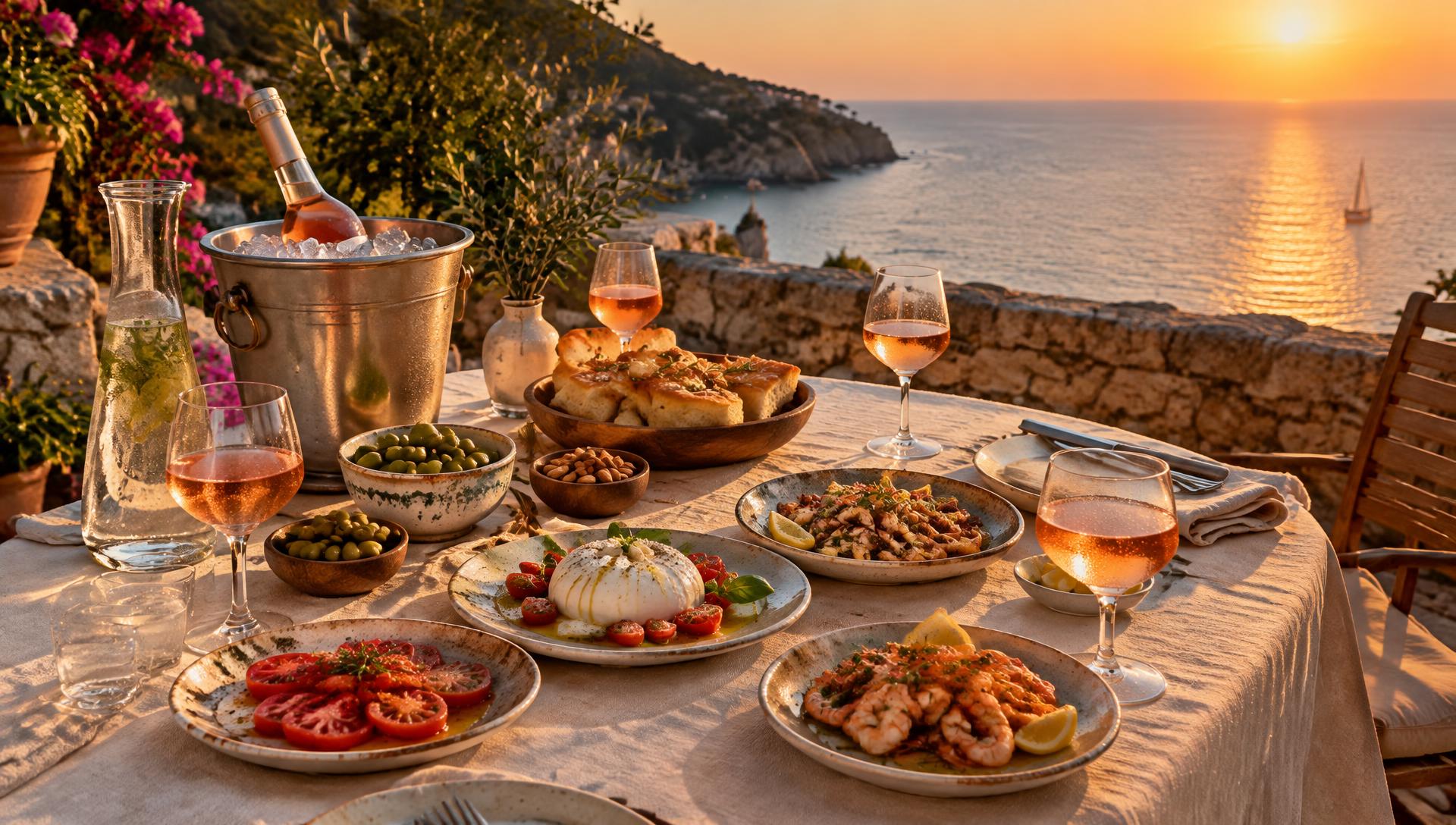
How do you create a Mediterranean apéritif?
A Mediterranean apéritif is a relaxed moment before dinner — or instead of it — built around a chilled drink and a few simple things to share: olives, nuts, fresh vegetables, tomatoes, bread, cheese or seafood. Keep the food easy to eat with your fingers, serve wine well chilled with plenty of cold water, and decide first whether dinner follows, because that sets how much to prepare.
Maison Cala Carnet
The simplest Mediterranean apéritif
- 1 chilled drink
- 3–5 things to share
- Good bread
- Cold water
- Ice
- A table
- People you want to stay a little longer
What is an apéritif?
The apéritif — l'apéro in everyday French — is the drink and small bites shared before a meal. Traditionally it opens the appetite; in practice it is the moment people arrive, settle in and start talking. It can be two people on a balcony or twenty around a villa pool.
Apéritif vs aperitivo
Apéritif is the French word, aperitivo the Italian. Both describe a drink with something to eat before dinner. The Italian aperitivo is often associated with bitter or spritz-style drinks and bar snacks; the French apéritif is often wine, pastis or champagne at home with olives and charcuterie. Along the Mediterranean the two blend naturally.
When is apéritif?
Usually early evening, roughly an hour or two before dinner. In summer on the Mediterranean it tends to drift later, following the heat and the sunset. A weekend apéritif can also happen at midday before a long lunch.
What to drink
Choose something chilled, refreshing and not too heavy: rosé, a crisp white, champagne or sparkling wine, a light spritz, pastis, or alcohol-free options such as sparkling water with citrus, iced tea or a good alcohol-free aperitivo. Offer one or two drinks well rather than a full bar.
Rosé as an apéritif
Dry rosé is one of the most natural apéritif wines: served chilled, refreshing in warm weather and easy with olives, vegetables, seafood, fresh cheeses and charcuterie. It sits between white and red, which helps when guests have different tastes.
Grenache rosé
Grenache is one of the Mediterranean's classic rosé grapes. Grenache rosés often show red-fruit character and a rounded texture, depending on how they are made — a style that suits tomatoes, grilled vegetables, charcuterie and seafood at the apéritif table.
What food to serve
Think of finger food that needs little last-minute work and holds up outdoors. Three to five things are enough for a simple apéritif. Balance salty, fresh, creamy and savoury, and always have bread.
Olives
The essential. Serve a mix — green, black, marinated with herbs, citrus or garlic — with a small dish for stones. Tapenade works too.
Nuts
Salted almonds, pistachios or roasted mixed nuts are easy and keep well. Mention them clearly for guests with allergies.
Fresh vegetables
Radishes, cucumber, fennel, peppers, cherry tomatoes and young carrots, cut simply and served cold. Add a dip, a little salt and good olive oil.
Tomatoes
Ripe summer tomatoes with olive oil, salt and basil, on toasted bread or on their own. Few things go better with chilled rosé.
Seafood
Prawns, marinated anchovies, grilled squid, smoked fish or oysters. Keep seafood cold on ice and serve it in small batches.
Raw fish & sushi
Crudo, tartare, ceviche or sushi pair well with a dry rosé. Buy from a trusted fishmonger, keep it very cold and serve it soon after preparing.
Cheese
Fresh goat's cheese, feta, burrata or mozzarella suit warm-weather apéritifs. A firmer cheese can add contrast. Take cheese out shortly before serving so it doesn't sweat in the heat.
Charcuterie
Thinly sliced ham, saucisson or chorizo. A small board goes a long way; serve it in shade.
Bread
A good baguette, focaccia, grissini or crackers carry everything else on the table. Slice just before serving so it stays fresh.
Dips
Hummus, tzatziki, tapenade, anchoïade, baba ganoush or a simple olive oil with herbs. Make them ahead and keep them cold.
Fruit
Melon, figs, cherries or grapes add freshness, and melon with ham is a classic. Keep fruit cold and add it at the end.
The 5-part apéritif
Build the table in five parts
- 1
Something salty
Olives or nuts
- 2
Something fresh
Vegetables or fruit
- 3
Something creamy
Cheese or dip
- 4
Something savoury
Seafood or charcuterie
- 5
Something to carry it
Bread or crackers
Add chilled drinks and water.
How much food should you prepare?
The main question is: is dinner coming afterwards? That matters more than the guest count alone.
Before dinner: keep quantities light — a few bowls and a board, enough to open the appetite rather than fill people up.
Apéritif replacing dinner: increase bread, protein, vegetables and cheese, and add more substantial plates so guests leave well fed.
When the apéritif becomes dinner
The French call it an apéritif dînatoire: an apéritif that carries on into a full, relaxed meal. Add salads, savoury tarts, grilled vegetables, seafood, cold meats and one or two larger sharing dishes, and bring them out in waves rather than all at once.
How to set a Mediterranean apéritif table
Keep it simple and within reach: small bowls rather than one huge platter, a board for bread and cheese, napkins, a dish for olive stones and cocktail sticks, water glasses alongside wine glasses, and an ice bucket in the shade.
Table styling
Linen, ceramic and wood suit the setting. Add a few herbs, lemons or olive branches rather than tall flowers that block conversation. Low candles or lanterns for when the light goes.
Serving rosé
Rosé is usually best served chilled, often around 8–12°C depending on style. Chill bottles for a few hours in the fridge, then keep the open bottle in an ice bucket with ice and water. Pour smaller amounts more often so the glass stays cool.
Maison Cala recommends serving Maison Cala Rosé at 12–14°C.
Water
Cold still and sparkling water should be on the table from the start, not on request. In summer heat it matters as much as the wine.
Ice
Have more ice than you think: for the bucket, for water and soft drinks, and for keeping seafood and cheese cool. Ice and water together chill a bottle faster than ice alone.
Music
Low enough that people can talk. Start softly as guests arrive and let the volume follow the evening.
Lighting
Use natural light while it lasts and plan for the moment it goes: lanterns, candles in glass or warm string lights. Avoid harsh overhead light.
Terrace apéritif
Follow the shade early and the view later. A small table, a few bowls and an ice bucket are enough; bring out food in batches so nothing sits in the sun.
Villa apéritif
Set up a drinks station away from the kitchen so guests serve themselves, with a second ice bucket and plenty of water. For larger groups, place food in two or three spots so people move around.
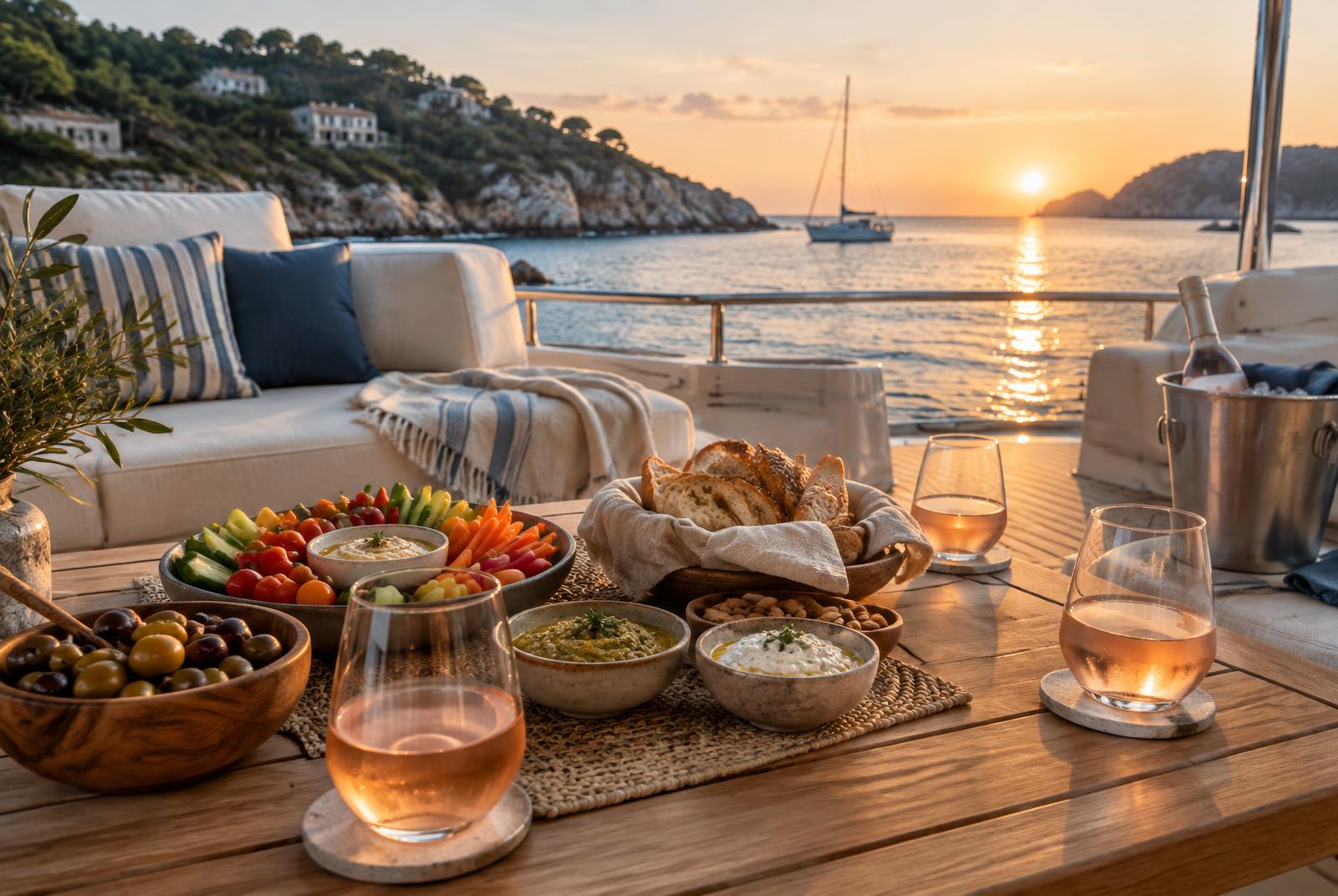
Yacht apéritif
On deck, use stable or unbreakable glassware, non-slip trays and covered dishes. Keep bottles in shade, rotate them from the wine fridge and tidy as you go.
Beach apéritif
Pack wine and food in cool boxes with ice, bring shade, unbreakable glasses, a board and a bag for rubbish. Check local rules on alcohol at the beach, and take everything home.
Poolside apéritif
No glass near the water: use quality unbreakable glassware. Keep food in shade, plenty of water around, and a towel near the ice bucket.
Sunset apéritif
Check the sunset time and start about an hour before. Face the table west, keep things simple and have lanterns ready for afterwards.
Apéritif for 2
One bottle in an ice bucket, a bowl of olives, some bread, tomatoes and a little cheese. Nothing more is needed.
Apéritif for 6
Three to five small dishes, a board of bread and cheese, two bottles chilled with a reserve in the fridge, and water on the table.
Large apéritif
Spread food over several stations, prepare most of it ahead, keep reserves of drinks and ice cold, and ask someone to help with refills. For events, plan quantities properly.
How many bottles of wine for an event? · Maison Cala for events
Apéritif food pairing
Dry rosé is versatile at the apéritif: olives, tomatoes, fresh cheeses, seafood, charcuterie and vegetables with dips all work. Very spicy or very sweet bites can be harder.
Maison Cala
The Maison Cala apéritif
Maison Cala was created around the idea that some of the best moments are the simplest ones: a table, something chilled, people arriving and no reason to rush. It is a French Grenache rosé produced in Southern France — not a Provence rosé — made for exactly this kind of Mediterranean evening. Vivez l'instant.
- Wine
- Maison Cala Rosé — French rosé
- Grape
- Grenache
- Produced in
- Southern France
- Bottle size
- 75 cl
- Nose
- Raspberry · Redcurrant · Vine peach
- Serving temperature
- 12–14°C
Please enjoy responsibly.
Maison Cala hosting checklist
Before everyone arrives
- Maison Cala chilled
- Reserve bottles cold
- Ice bucket ready
- Water chilled
- Glasses ready
- Olives / snacks out
- Bread ready
- Food prepared
- Music low
- Table in shade if needed
Somewhere by the Mediterranean.
Ideas for where to take your apéritif along the coast — destination guides, not a list of places that sell Maison Cala.
Monaco
Harbour terraces and evenings above the port.
Nice
Old-town squares and the light over the Baie des Anges.
Antibes
Ramparts, the old port and yachts at anchor.
Cannes
Beach evenings along the Croisette.
Saint-Tropez
Village terraces and long summer sunsets.
French Riviera
The whole coast, from Menton to Saint-Tropez.
Find Maison Cala for your next apéritif
Frequently asked questions
What is a Mediterranean apéritif?
A relaxed drink with simple shared food before dinner, or instead of it: olives, vegetables, tomatoes, bread, cheese or seafood with a chilled drink.
What should I serve for an apéritif?
Three to five things: something salty, something fresh, something creamy, something savoury and bread, plus chilled drinks and water.
What is the difference between apéritif and aperitivo?
Apéritif is French, aperitivo Italian; both mean a drink with small bites before a meal.
Is rosé a good apéritif wine?
Yes. Dry rosé is served chilled and pairs easily with typical apéritif food.
How much food should I prepare?
It depends mostly on whether dinner follows. Keep it light before dinner; add bread, protein and larger plates if the apéritif replaces dinner.
What is an apéritif dînatoire?
An apéritif that turns into a relaxed meal, with more substantial sharing dishes.
What temperature should rosé be for an apéritif?
Usually well chilled, often around 8–12°C depending on style. Maison Cala recommends serving Maison Cala Rosé at 12–14°C.
Is Maison Cala a Provence rosé?
No. Maison Cala is a French Grenache rosé produced in Southern France.
Continue reading
- Grenache Rosé: A Guide to One of the Mediterranean’s Great Rosé Grapes
- How to Serve Rosé Wine
- Rosé Wine Food Pairing: What to Eat with Rosé
- How Many Bottles of Wine Do You Need for an Event?
- Rosé Wine for Yachts
- Rosé Wine for a French Riviera Wedding
- Wine for a Wedding
- Rosé Wine Serving Temperature
- How Long Does Rosé Wine Last?
- French Rosé Wine: A Complete Guide
- Languedoc Rosé Wine: A Complete Guide
- Is Rosé Wine Dry or Sweet?
- How Is Rosé Wine Made?
- Rosé Wine with Seafood: What Pairs Best?
- What Does HVE Certification Mean for Wine?