
The quick answer
For a French Riviera wedding, serve a dry, fresh, pale rosé that works with apéritif bites, seafood and vegetables as well as on its own in the sun. It does not need to be a Provence rosé — any well-made French rosé fits. Keep it well chilled, plan roughly a third to half of the wine as rosé when white and red are also poured, and use one rosé across the weekend so service stays simple.
Quick wedding rosé guide
- Style
- Dry, fresh, pale
- Best moments
- Welcome dinner, reception, pool, brunch
- Temperature
- Well chilled; Maison Cala at 12–14°C
- Glass
- White-wine glass, 150 ml pour
- Per bottle
- About 5 glasses (75 cl)
- Alongside
- Champagne, white, red, alcohol-free options
The setting
Why rosé works for French Riviera weddings
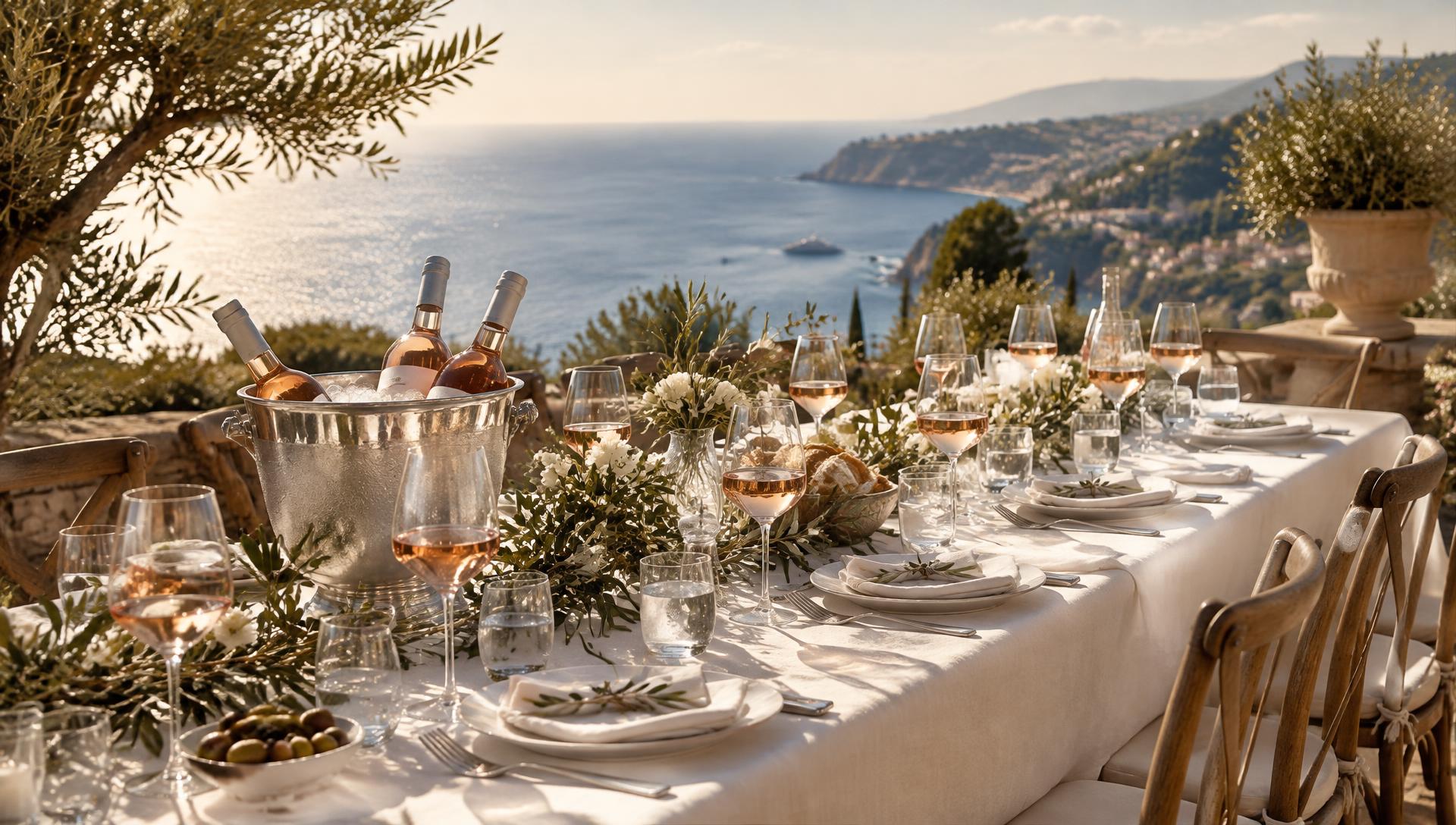
Riviera weddings are usually outdoor and often long: lunches under pines, terraces at sunset, dancing until late in warm air. Rosé is light, refreshing and pairs with the Mediterranean dishes caterers on the coast tend to serve. It also looks right on a summer table, which matters more than people admit in wedding photos.
It is not a replacement for everything: Champagne still opens the reception, and a red often appears with meat at dinner. Rosé simply carries more of the weekend than in a city wedding.
A common confusion
French rosé vs Provence rosé
Provence is a famous rosé region, and the Riviera sits next to it — but "French rosé" covers far more. Rosé is made across Southern France, including Languedoc, the Rhône and the Mediterranean coast. A wedding on the Riviera does not need a Provence appellation on the label to feel at home.
To be clear about our own wine: Maison Cala is a French Grenache rosé produced in Southern France. It is not a Provence rosé and not a Côtes de Provence. For more, read the French rosé guide.
Choosing
How to choose a wedding rosé
Style
Pale, fresh and fruity rosés suit most guests; very aromatic or sweet styles divide a crowd.
Dryness
Dry rosé works best with food and through a long day. Ask your supplier if unsure.
Menu
Seafood, grilled fish, vegetables, salads and herbs all suit rosé; rich red meat suits red.
Time of day
Rosé shines at lunch, apéritif and brunch; evening dinners can share it with white and red.
Venue
Outdoor terraces, gardens, beaches and decks favour chilled rosé; plan ice accordingly.
Season
June to September is peak rosé weather on the coast. In spring or autumn, plan a little more red.
Other wines
With Champagne, white and red also served, rosé usually becomes one of several wines.
Guest preference
International guests often expect rosé on the Riviera. Taste it before you decide.
The grape
Grenache rosé
Grenache is one of the great Mediterranean rosé grapes: it thrives in sun and heat and typically gives red-fruit flavours, softness and freshness when picked well. That makes Grenache rosé an easy match for warm weather and shared menus. Read more in our Grenache rosé guide.
Moment by moment
Where rosé fits across the wedding
Welcome dinner
Usually the most relaxed evening: long tables, shared plates, guests meeting each other. A chilled rosé poured as people arrive sets the tone for the weekend.
Cocktail reception
After the ceremony, Champagne often leads, with rosé offered beside it for guests who want something lighter and longer. Pair it with canapés of seafood, vegetables and olives. It forms one part of the full beverage programme.
Wedding dinner
Rosé works with starters, fish and Mediterranean main courses; white and red usually join for other courses. Agree with your caterer which wine goes with each course.
Day-after brunch
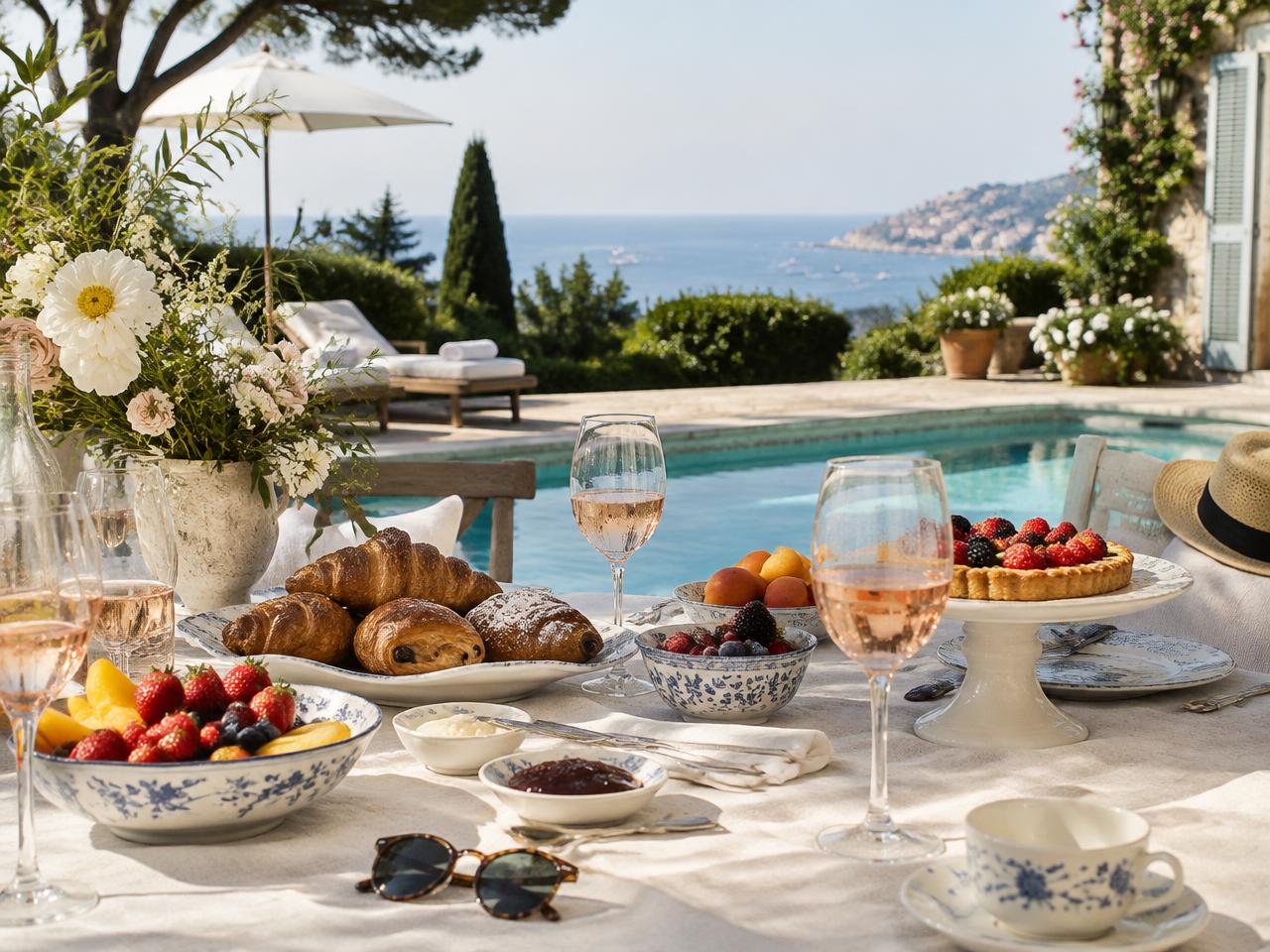
A slower goodbye by the pool. Pastries, fruit and eggs alongside a fresh rosé — often the moment guests remember most.
Venues
Villas, hotels, yachts and beaches
Villa weddings
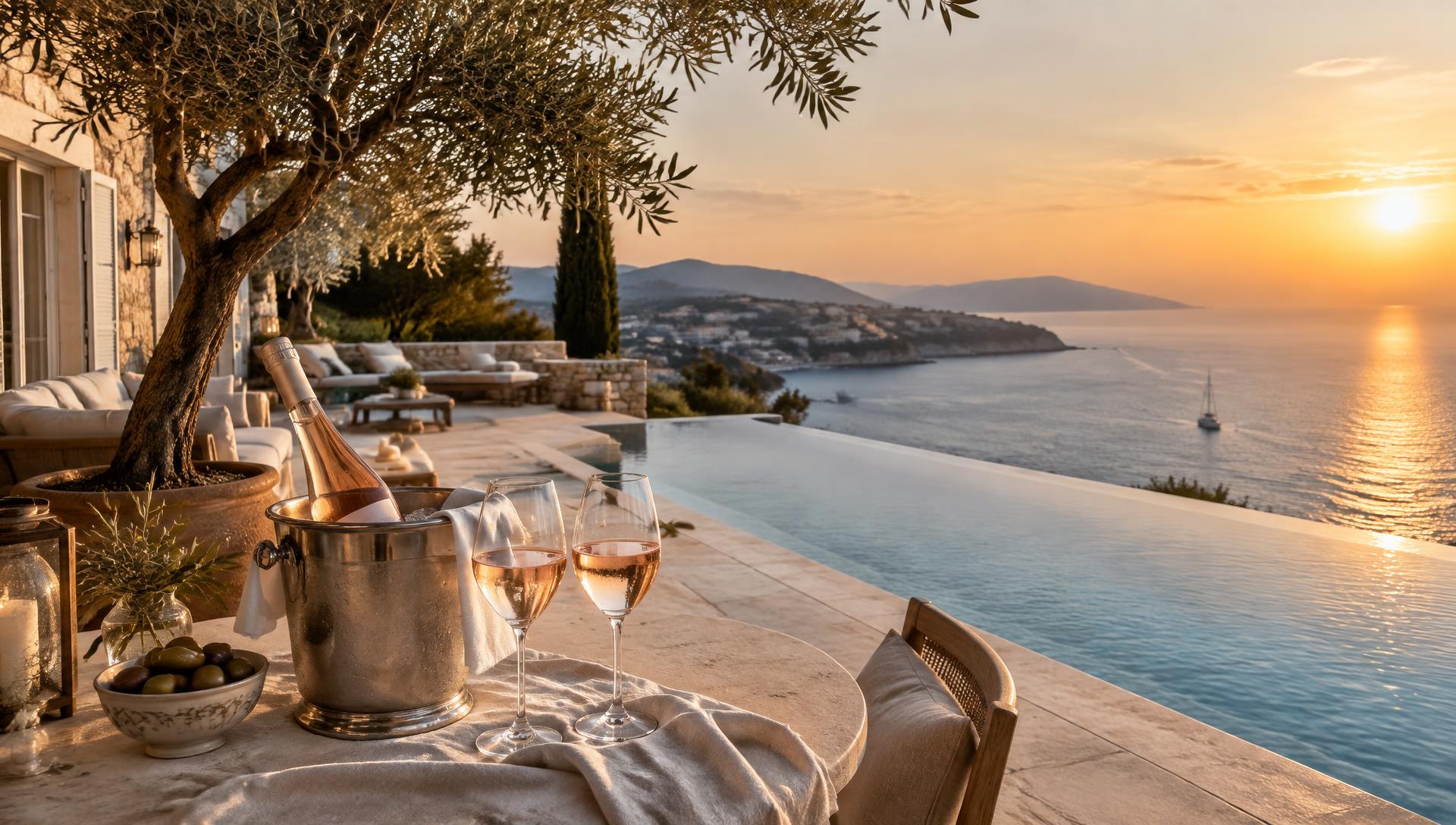
You control the bar, but you also handle everything: fridge space, ice deliveries, glassware and staff. Count refrigerators early and ask your caterer about chilled trailers for larger guest lists.
Hotel weddings
Hotels often have their own wine list and policies on outside wine. Ask your venue or planner how it works before choosing a rosé.
Yacht weddings and yacht days
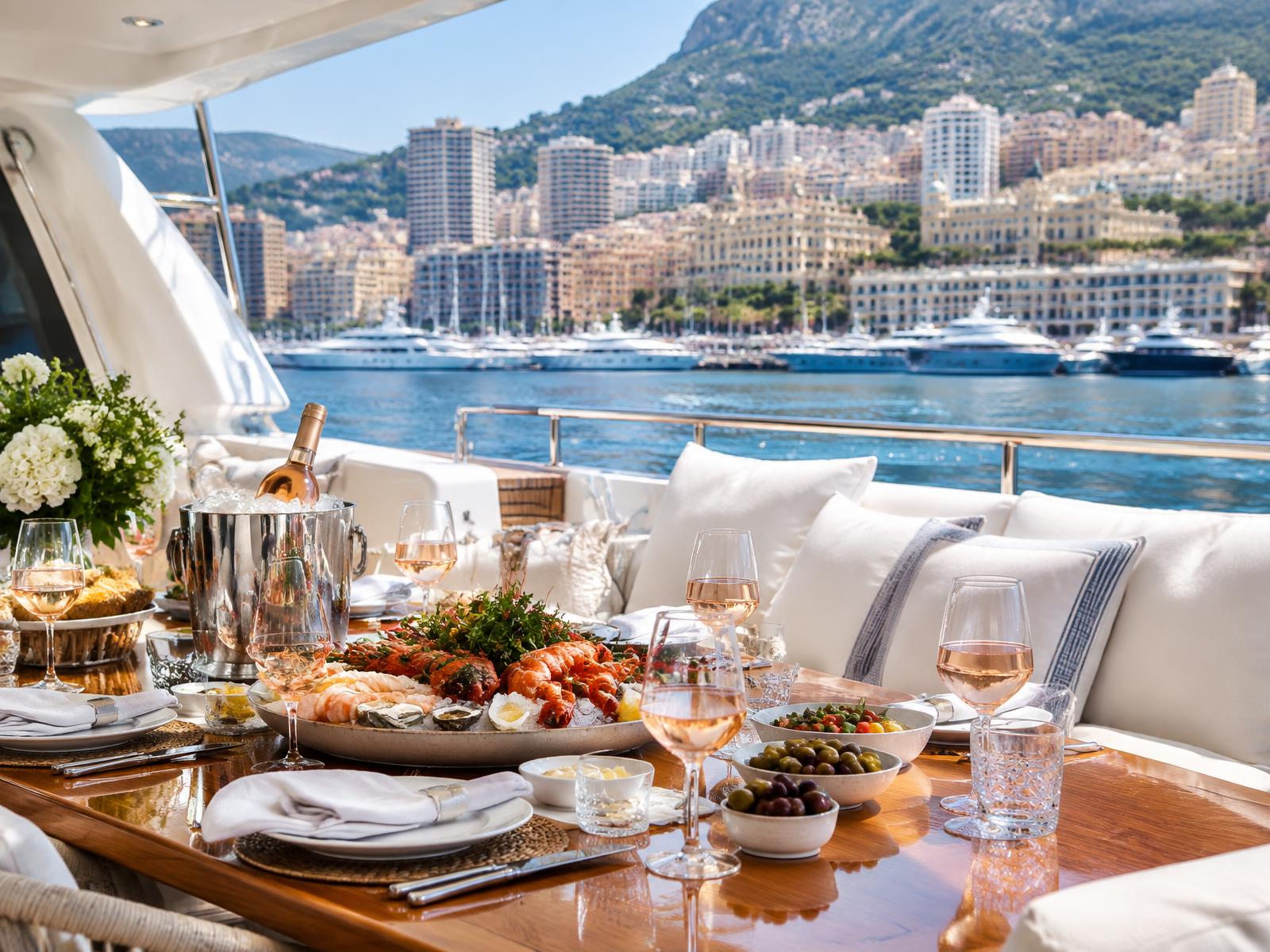
Storage is limited and sun is strong. Load bottles cold, keep ice in insulated boxes and let the crew advise on quantities and glassware. See rosé on yachts.
Beach weddings and beach events
Shade and ice matter more than anything. Serve smaller pours more often so glasses never warm up in the sun.
Destinations
Rosé for Monaco, Cannes and Saint-Tropez weddings
Each part of the coast has its own rhythm. Weddings on the French Riviera covers venues and destinations in depth.
Monaco
Terraces, harbour views and yacht days; formal dinners often call for rosé alongside a wider wine list. Maison Cala in Monaco
Cannes
Seafront venues and villas in the hills, with many weddings stretching across a weekend. Maison Cala in Cannes
Saint-Tropez
Beach lunches and villa parties, where rosé is often the main wine of the day. Maison Cala in Saint-Tropez
The menu
Food pairing for a wedding menu
- Canapés: tapenade, anchoïade, socca, prawns, tomato and basil.
- Starters: salade niçoise, grilled vegetables, burrata, tuna tartare.
- Mains: sea bass, bouillabaisse-style fish, herb-roasted chicken, risotto.
- Brunch: eggs, smoked salmon, fruit, pastries.
Very spicy, very rich or chocolate desserts are better with other drinks. More in the rosé food pairing guide.
Service
Serving temperature and service
Rosé is served chilled; Maison Cala Rosé is best at 12–14°C. In Riviera heat a bottle warms fast, so keep opened bottles in ice buckets with water and ice, not ice alone. See rosé serving temperature.
- Open in rotation rather than all at once.
- Use white-wine glasses and pour around 150 ml.
- Brief staff on which wine goes with each course.
- Always offer water and alcohol-free options.
More on how to serve rosé.
Quantities
How much rosé for a wedding?
A 75 cl bottle gives about five 150 ml glasses. The total depends on how long each event lasts, how many guests choose wine and what else is poured. On a Riviera weekend where rosé is the main rosé alongside white, red and Champagne, it typically takes half of the wine poured. For the full rosé / white / red split, see the wedding wine guide.