
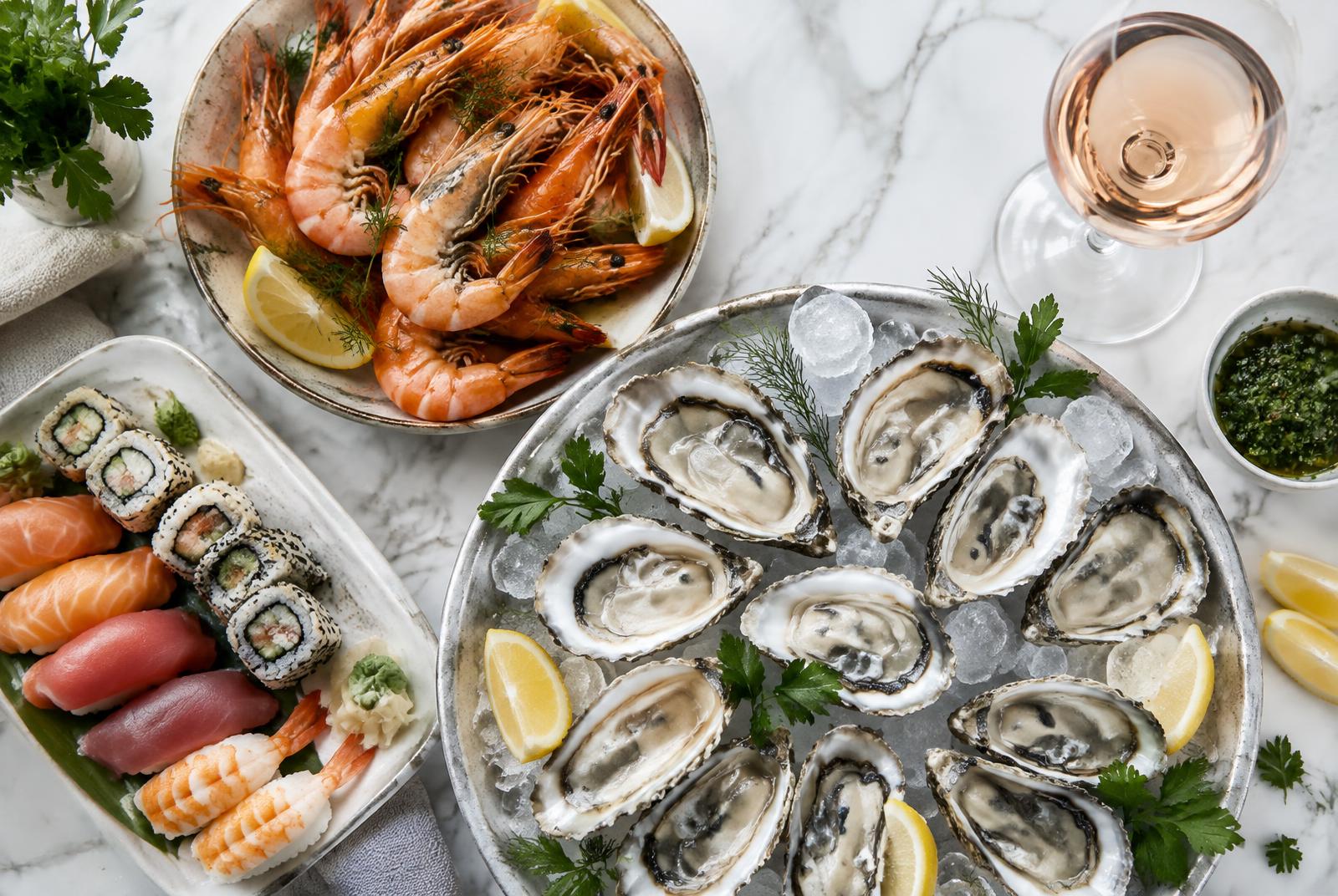
Does Rosé Go with Seafood?
Yes. A fresh, dry rosé is one of the most versatile wines for seafood. Its acidity lifts delicate fish and shellfish, its low tannin avoids the metallic taste that tannic red wine can create with fish, and its red-fruit character gives it more body than many white wines. Choose a pale, light, crisp rosé for oysters, raw fish and simple shellfish, and a rounder, fuller rosé for salmon, tuna, lobster, grilled fish and tomato- or saffron-based Mediterranean dishes.
Why Rosé Works So Well with Seafood
- Acidity: fresh acidity cuts through richness and lifts delicate flavours, much like a squeeze of lemon.
- Low tannin: tannin can clash with fish oils and taste metallic; most rosé has very little.
- Body between white and red: rosé has enough fruit and texture for meatier fish such as tuna and salmon.
- Aromatic range: red-fruit, citrus and herbal notes echo the herbs, tomatoes and olive oil of coastal cooking.
The aim is balance: neither the wine nor the dish should overwhelm the other.
Quick Guide: Which Rosé for Which Seafood?
| Dish | Rosé style | Why it works |
|---|---|---|
| Oysters | Pale, very dry, crisp | Acidity and minerality echo the brine |
| Shrimp & prawns | Light to medium, fruity | Sweet flesh meets fresh red fruit |
| Lobster | Rounder, textured | Matches richness, especially with butter |
| Scallops | Delicate, soft texture | Respects sweetness and fine texture |
| Mussels | Dry, fresh | Works with garlic, herbs and white wine sauces |
| Salmon | Medium to fuller-bodied | Stands up to an oily, rich fish |
| Tuna | Fuller, more structured | Meaty fish needs a wine with body |
| Sea bass & white fish | Light, elegant | Keeps the focus on delicate flesh |
| Squid & calamari | Crisp, dry | Refreshes after frying or grilling |
| Sushi & sashimi | Pale, dry, delicate | Fresh without overpowering raw fish |
| Grilled fish | Medium-bodied, fruity | Handles smoky, charred notes |
| Bouillabaisse & paella | Fuller, generous | Matches tomato, saffron and garlic |
Rosé with Shellfish
Rosé with oysters
Suggested style: pale, bone-dry, crisp
Oysters are briny and mineral, so they need a wine with high acidity and little fruit sweetness. A very pale, dry rosé works well, especially with plain oysters and a little lemon. With mignonette (shallot and vinegar), keep the wine crisp. Classic alternatives such as Muscadet or Chablis remain excellent if you prefer white.
Rosé with shrimp and prawns
Suggested style: light to medium, fruity
The natural sweetness of shrimp and prawns suits rosé's red-fruit notes. Grilled prawns with garlic and herbs, prawn cocktail or shrimp skewers all pair easily. For chilli or spicy marinades, choose a fruitier, less alcoholic rosé.
Rosé with lobster
Suggested style: rounder, textured
Lobster is rich, especially with butter or cream. A rosé with some texture — for example one aged on fine lees — has the weight to match it. Chilled lobster salad works with a lighter style; lobster thermidor needs more body.
Rosé with scallops
Suggested style: delicate, soft
Seared scallops are sweet and tender. A delicate rosé with gentle fruit and a soft texture respects them; avoid wines that are too powerful. With a citrus or beurre blanc sauce, a slightly rounder style works well.
Rosé with mussels
Suggested style: dry, fresh
Moules marinières, with garlic, parsley and white wine, suit a dry, fresh rosé. With cream or saffron, a slightly fuller rosé balances the sauce; with tomato and chilli, choose a fruitier one.
Rosé with Fish
Rosé with salmon
Suggested style: medium to fuller-bodied
Salmon is oily and rich, which is why it is one of the best fish for rosé. Grilled or roasted salmon pairs with a medium to fuller-bodied rosé; smoked salmon with a crisp, dry style; salmon tartare or gravlax with a pale, fresh rosé.
Rosé with tuna
Suggested style: fuller, more structured
Tuna is meaty, almost like red meat. Seared tuna, tuna steak or niçoise salad suit a rosé with body and fruit. Raw tuna (tataki, tartare) works with a lighter, fresher style.
Rosé with sea bass and white fish
Suggested style: light, elegant
Sea bass, sea bream, cod, sole and other white fish are delicate. A light, elegant rosé keeps the focus on the fish, especially when it is simply grilled, baked in salt or served with olive oil and herbs.
Rosé with squid and calamari
Suggested style: crisp, dry
Fried calamari needs a wine with refreshing acidity to cut the batter. Grilled squid with garlic, lemon or chilli also suits a crisp, dry rosé.
Rosé with Sushi, Grilled Fish and Mediterranean Dishes
Rosé with sushi and sashimi
Suggested style: pale, dry, delicate
Raw fish is subtle, so choose a pale, dry rosé that will not overwhelm it. Be careful with soy sauce, wasabi and pickled ginger, which can make a wine taste harsher; use them sparingly. Salmon or tuna rolls can take a slightly rounder style.
Rosé with grilled fish
Suggested style: medium-bodied, fruity
Grilling adds smoky, charred flavours. A medium-bodied rosé with ripe red fruit handles them well, especially with herbs, olive oil, lemon or a light marinade.
Rosé with fried seafood
Suggested style: crisp, dry
Fish and chips, tempura, fritto misto and fried calamari all benefit from a crisp, dry rosé whose acidity refreshes the palate.
Rosé with Mediterranean seafood dishes
Suggested style: fuller, generous
Bouillabaisse, seafood paella, spaghetti alle vongole, grilled sardines and seafood risotto bring tomato, saffron, garlic and herbs. A fuller, generous rosé matches these flavours — the kind of pairing found along the Mediterranean coast. Ceviche, with lime and chilli, prefers a crisp, fresh rosé.
Match the Sauce and Cooking Method, Not Just the Fish
The sauce or seasoning often matters more than the fish itself.
| Preparation | Choose a rosé that is… |
|---|---|
| Raw (oysters, sashimi, crudo) | Pale, dry and delicate |
| Lemon, herbs, olive oil | Fresh and crisp |
| Grilled or barbecued | Medium-bodied with ripe fruit |
| Fried or battered | Crisp, with refreshing acidity |
| Butter or cream sauces | Rounder, with some texture |
| Tomato, saffron, garlic | Fuller and generous |
| Chilli or spice | Fruity, lower in alcohol |
How to Choose the Best Rosé for Seafood
- Prefer dry styles for most seafood; off-dry rosé can help with spicy dishes.
- Pale, light rosés suit raw and delicate fish; fuller rosés suit oily fish and rich sauces.
- Acidity is your friend: fresh wines keep seafood tasting clean.
- Colour alone does not tell you the style; check the producer's tasting notes.
Rosé is not always the best answer. For very delicate raw oysters, many people still prefer a crisp white; for some heavily spiced or very rich dishes, another wine may suit better. Pairing is a matter of taste, and these are suggestions rather than rules.
For pairings beyond seafood, read Rosé Wine Food Pairing.
Serving Rosé with Seafood
Serve rosé chilled but not ice-cold, so its aromas can show. Lighter rosés are generally served around 8–12°C, fuller styles slightly warmer. Keep the bottle in an ice bucket at an outdoor table, and use medium-sized glasses with a tapered rim.
For temperatures in detail, see Rosé Wine Serving Temperature.
For glassware and outdoor service, read How to Serve Rosé Wine.
Maison Cala
Maison Cala Rosé with Seafood
Maison Cala Rosé 2024 is a Grenache rosé produced near Carcassonne, in Southern France. It is not a Provence wine.
Tasting notes: appearance — Pale pink; nose — Raspberry · Redcurrant · Vine peach; palate — Fresh. Thirst-quenching. Beautifully rounded.. Serve at 12–14°C.
With its fresh red fruit and rounded palate from four months on fine lees, it is a natural suggestion for grilled prawns, salmon, grilled white fish and Mediterranean dishes with herbs and olive oil. As always, pairing is a matter of taste.
Find it on Where to Buy.
39 € per bottle
Five Myths About Rosé and Seafood
Myth 1
“Only white wine goes with fish.”
Reality: Dry rosé pairs with many fish and shellfish dishes.
Myth 2
“Any rosé works with any seafood.”
Reality: Match light rosés with delicate dishes and fuller ones with rich dishes.
Myth 3
“Rosé is too sweet for seafood.”
Reality: Most rosés served with seafood are dry.
Myth 4
“The fish matters more than the sauce.”
Reality: The sauce and cooking method often decide the pairing.
Myth 5
“Colder is always better.”
Reality: Serving rosé too cold hides its aromas.
Frequently Asked Questions About Rosé and Seafood
- Does rosé wine go with seafood?
- Yes. A fresh, dry rosé is one of the most versatile wines for seafood. Its acidity lifts delicate fish and shellfish, its low tannin avoids the metallic taste that tannic red wine can create with fish, and its red-fruit character gives it more body than many white wines. Choose a pale, light, crisp rosé for oysters, raw fish and simple shellfish, and a rounder, fuller rosé for salmon, tuna, lobster, grilled fish and tomato- or saffron-based Mediterranean dishes.
- What is the best rosé for seafood?
- A dry, fresh rosé with good acidity suits most seafood. Choose a pale, light style for raw and delicate dishes and a fuller one for salmon, tuna, lobster or rich sauces.
- Is rosé good with salmon?
- Yes. Salmon is one of the best fish for rosé; a medium to fuller-bodied rosé suits grilled or roasted salmon.
- Does rosé go with shrimp and prawns?
- Yes. Their natural sweetness pairs well with rosé's red-fruit character, especially when grilled with garlic and herbs.
- Can you drink rosé with oysters?
- Yes, choose a very pale, bone-dry and crisp rosé. Many people also enjoy oysters with a dry white wine.
- Is rosé good with lobster?
- Yes, a rounder, textured rosé matches lobster's richness, especially with butter.
- Does rosé go with sushi?
- A pale, dry, delicate rosé works well. Use soy sauce and wasabi sparingly, as they can make wine taste harsher.
- What rosé goes with grilled fish?
- A medium-bodied rosé with ripe fruit handles the smoky notes of grilled fish.
- Is rosé better than white wine with fish?
- Not better, but more versatile with some dishes — especially oily fish, tomato-based sauces and grilled seafood.
- Should rosé be served cold with seafood?
- Chilled, not ice-cold: generally around 8–12°C for lighter styles and slightly warmer for fuller ones.
- Does Maison Cala Rosé pair with seafood?
- Its fresh, red-fruit profile with a rounded palate makes it a natural suggestion for prawns, grilled fish, salmon and Mediterranean dishes. Pairings remain a matter of taste.
- Is Maison Cala a Provence rosé?
- No. Maison Cala is a Grenache rosé produced near Carcassonne, in Southern France.
Explore More Rosé Wine Guides
Sources
Please enjoy responsibly. Sale of alcohol is reserved for adults of legal drinking age.